







What's Happening?
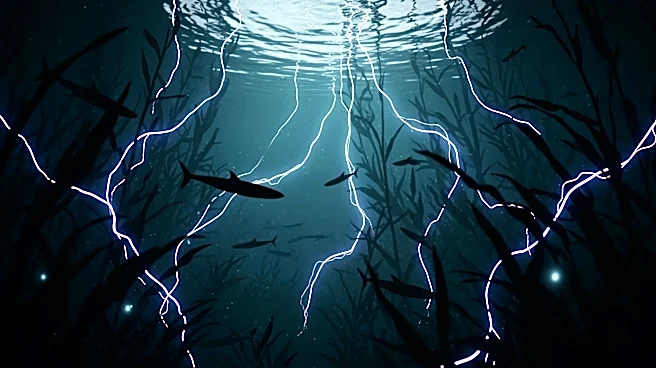
A recent study has revealed that electric eels and knifefish in the Amazon rainforest employ sophisticated stealth tactics to hunt and evade each other. Both species use electric pulses to navigate and detect prey, but they have developed a strategy of
'electric silence' to avoid detection. Electric eels temporarily stop emitting electrical pulses to surprise knifefish, while knifefish turn off their own pulses to become less detectable. This behavior mirrors the hunting strategies of orcas, which also use silence to avoid alerting prey. The study highlights convergent evolution, where different species develop similar adaptations to environmental challenges.
Why It's Important?
The discovery of these stealth tactics provides new insights into predator-prey dynamics and the evolutionary pressures that shape animal behavior. Understanding these interactions can enhance our knowledge of ecological systems and the adaptive strategies that species use to survive. The study also underscores the complexity of sensory systems in animals and their role in evolutionary biology. By examining these behaviors, researchers can gain a deeper understanding of how animals adapt to their environments, which can inform conservation efforts and ecological management.
Beyond the Headlines
The study of electric eels and knifefish offers a glimpse into the broader implications of sensory adaptation and its impact on survival. The ability to switch between sensory awareness and stealth highlights the delicate balance animals must maintain to thrive in competitive ecosystems. This research may inspire further exploration of similar behaviors in other species, contributing to a more comprehensive understanding of evolutionary biology and the interconnectedness of life on Earth.