

What's Happening?
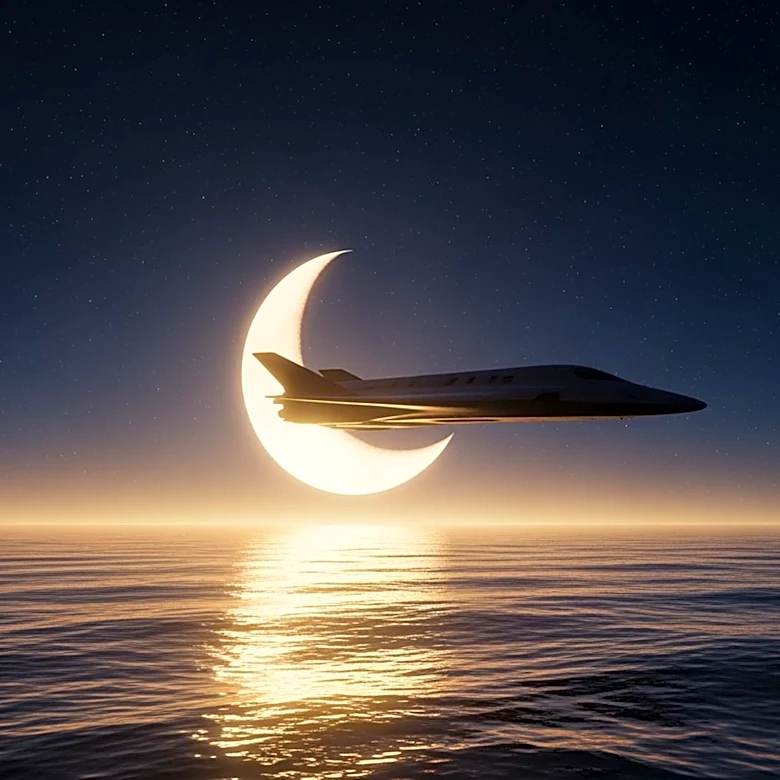
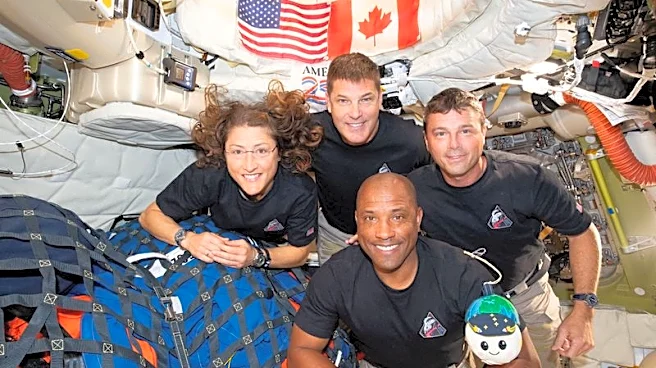
The crew of NASA's Artemis II mission, consisting of astronauts Reid Wiseman, Victor Glover, Christina Koch, and Canadian astronaut Jeremy Hansen, has returned to Earth after a 10-day mission around the moon. The mission, which marked the first human
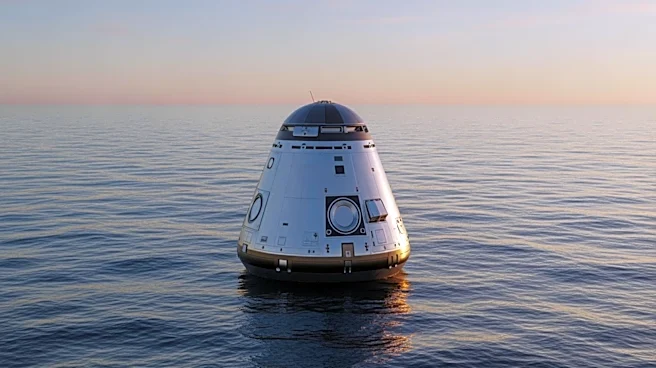
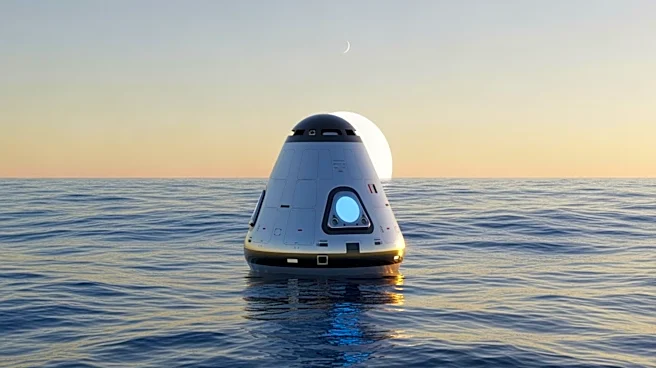
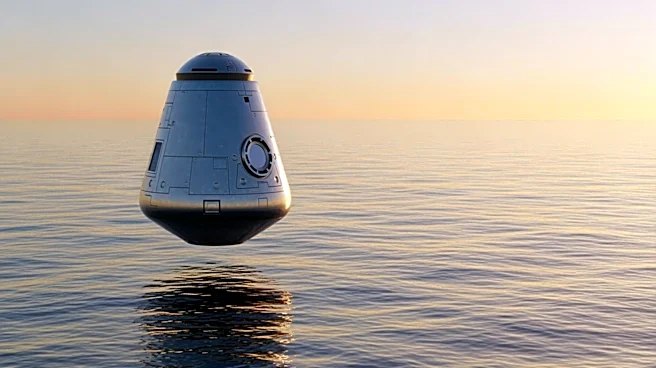
journey to the moon in over 50 years, concluded with a splashdown off the coast of San Diego on April 10, 2026. The astronauts were welcomed back at Ellington Field near NASA's Johnson Space Center in Houston, where they reunited with family and colleagues. The mission set a record for the farthest distance humans have traveled from Earth, captivating global audiences with its breathtaking imagery and emotional moments.
Why It's Important?
The successful completion of the Artemis II mission represents a significant milestone in human space exploration, rekindling interest in lunar exploration and paving the way for future missions. This mission not only demonstrated the capabilities of NASA's Orion spacecraft and Space Launch System but also strengthened international collaboration in space exploration, as evidenced by the inclusion of Canadian astronaut Jeremy Hansen. The mission's success could lead to increased funding and support for NASA's Artemis program, which aims to establish a sustainable human presence on the moon and eventually send humans to Mars.
What's Next?
Following the successful return of the Artemis II crew, NASA is expected to continue preparations for Artemis III, which aims to land astronauts on the lunar surface. This mission will further test the technologies and strategies needed for long-term lunar exploration. Additionally, the experiences and data gathered from Artemis II will inform future missions, helping to refine spacecraft design and mission planning. The international space community will likely watch closely as NASA progresses towards its goal of sustainable lunar exploration.