






What's Happening?
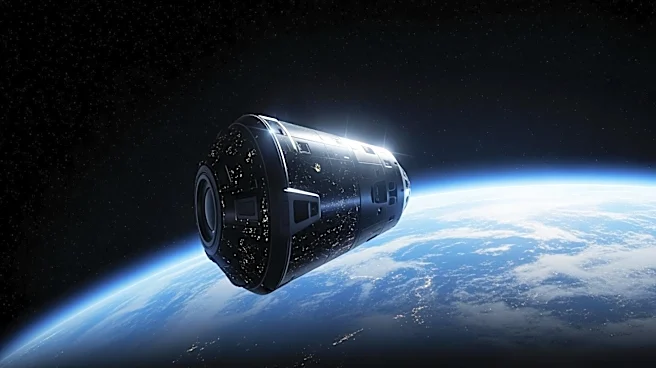
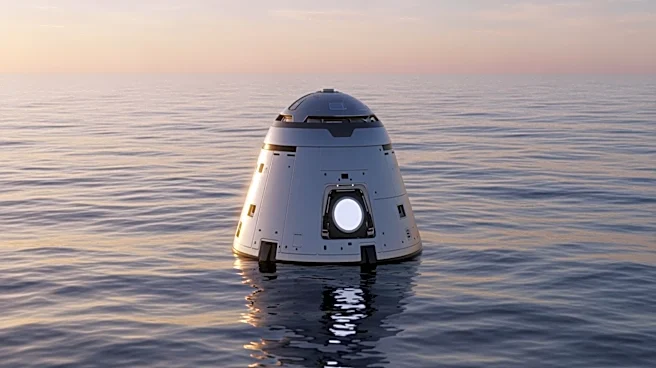
NASA's Artemis II mission has successfully concluded with the Orion spacecraft carrying NASA astronauts Reid Wiseman, Victor Glover, Christina Koch, and Canadian Space Agency astronaut Jeremy Hansen landing in the Pacific Ocean off the coast of California.
The mission, which lasted nearly 10 days, involved a journey around the Moon and back to Earth. Following the splashdown, NASA, along with U.S. Navy and Air Force teams, initiated recovery operations to bring the crew and the spacecraft aboard the USS John P. Murtha. The recovery process includes post-mission medical evaluations for the astronauts and a thorough inspection of the spacecraft once it returns to NASA's Kennedy Space Center in Florida.
Why It's Important?
The successful completion of the Artemis II mission marks a significant milestone in NASA's efforts to return humans to the Moon. This mission serves as a precursor to future lunar exploration missions, including Artemis III, which aims to land astronauts on the Moon's surface. The data and experience gained from Artemis II are crucial for refining the technologies and procedures necessary for sustained human presence on the Moon and potentially Mars. The mission also demonstrates international collaboration in space exploration, with the inclusion of a Canadian astronaut, highlighting the global interest and cooperation in advancing space exploration.
What's Next?
Following the successful splashdown, the Artemis II crew will undergo medical evaluations and debriefings. The Orion spacecraft will be transported back to NASA's Kennedy Space Center for detailed inspections and data retrieval. The insights gained from this mission will inform the planning and execution of Artemis III, which aims to land astronauts on the lunar surface. NASA will continue to refine its technologies and strategies for deep space exploration, with a focus on sustainability and international partnerships.