









What's Happening?
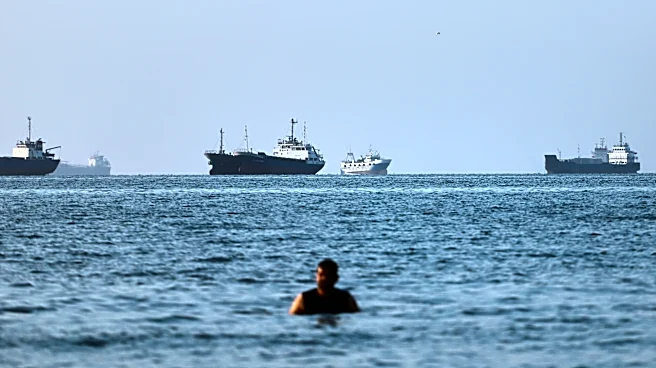
The International Energy Agency (IEA) has significantly revised its 2026 oil demand outlook, projecting a year-on-year decline of 1.1 million barrels per day, a stark contrast to its previous forecast of growth. This revision comes as the Strait of Hormuz,
a critical oil transit chokepoint, reopens following an interim agreement between the U.S. and Iran. The reopening is expected to alleviate one of the largest oil supply disruptions in history, which had severely restricted global oil flows. The IEA's report highlights the impact of geopolitical events on oil demand, noting that the disruption led to a significant contraction in demand during the second quarter of 2026, the deepest since the COVID-19 pandemic.
Why It's Important?
The reopening of the Strait of Hormuz is a pivotal development for global oil markets, as it is a major conduit for oil transportation. The IEA's revised demand outlook reflects the profound impact of geopolitical tensions on global energy dynamics. The anticipated decline in demand underscores the vulnerability of global oil markets to supply disruptions and geopolitical instability. The reopening of the strait is expected to stabilize oil flows, but the potential for future disruptions remains a concern. The IEA's projections will be closely watched by market participants, as they navigate the complexities of global oil supply and demand in a volatile geopolitical environment.
What's Next?
The IEA's forecast suggests a potential surplus in the global oil market by 2027, driven by increased supply from the Middle East and other regions. This surplus could lead to lower oil prices and provide an opportunity for countries to replenish depleted inventories. However, the geopolitical landscape remains uncertain, and any escalation in tensions could disrupt these projections. The effectiveness of the U.S.-Iran agreement in maintaining stability in the Strait of Hormuz will be a key factor in the global oil market's future dynamics. Market participants will continue to monitor developments closely, as they assess the impact of geopolitical events on oil supply and demand.