


What's Happening?
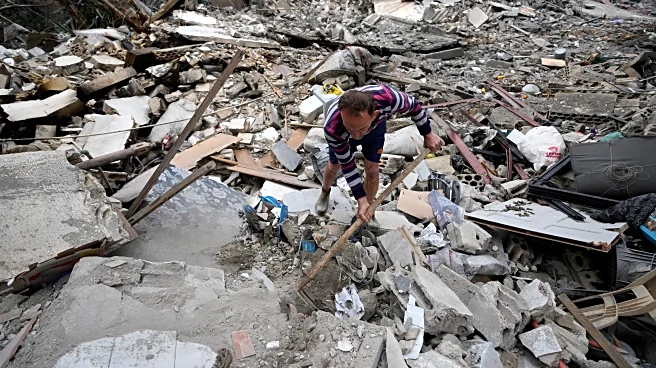
The US and Israeli military campaign against Iran, initiated a month ago, has led to significant geopolitical and economic consequences. The conflict has involved over 15,000 strikes on Iranian infrastructure, with the Iranian regime maintaining control
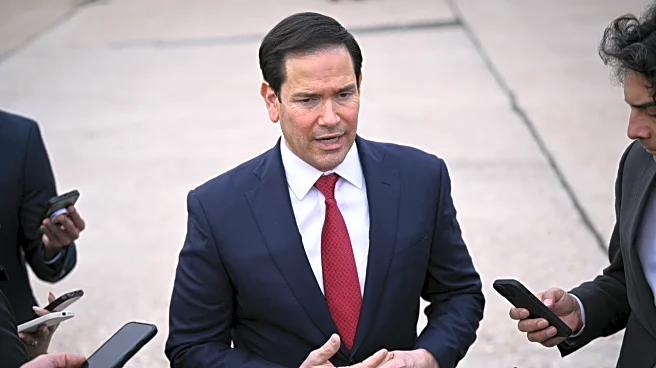
over the Strait of Hormuz, impacting global energy markets. The US military's capabilities have been tested, showcasing advanced technologies and joint operations. However, sustaining such operations poses challenges due to logistical constraints. The conflict has also prompted strategic shifts, with Russia and China viewing the situation as an opportunity to advance their interests. The Trump administration's 'peace through strength' doctrine is being reevaluated as ground forces are considered for deployment.
Why It's Important?
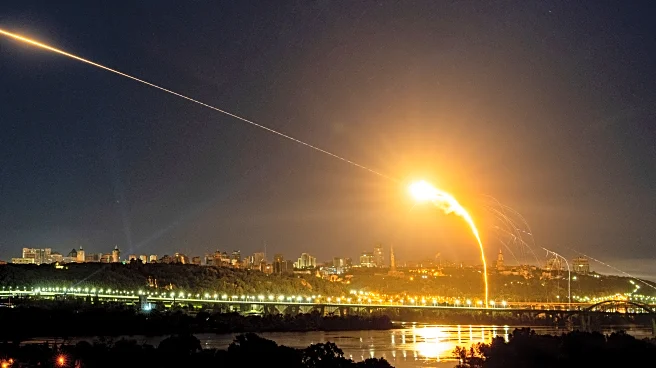
The conflict has far-reaching implications for global energy markets, with disruptions affecting oil and gas supplies. The strategic control of the Strait of Hormuz by Iran has led to economic repercussions worldwide. The situation has also highlighted the US military's operational capabilities and the need for sustained logistical support. Geopolitically, the conflict has shifted focus from other global issues, such as Russia's actions in Ukraine, and has provided strategic opportunities for China. The potential for escalation and the involvement of ground forces could further complicate international relations and economic stability.
What's Next?
The conflict's trajectory remains uncertain, with potential for both diplomatic resolutions and further military escalation. The US may need to address logistical challenges to sustain military operations. Internationally, the conflict could lead to shifts in alliances and strategic partnerships, particularly in the Middle East. The involvement of Russia and China may influence future geopolitical dynamics. The Trump administration's decisions in the coming weeks will be crucial in determining the conflict's outcome and its impact on global stability.