






What's Happening?
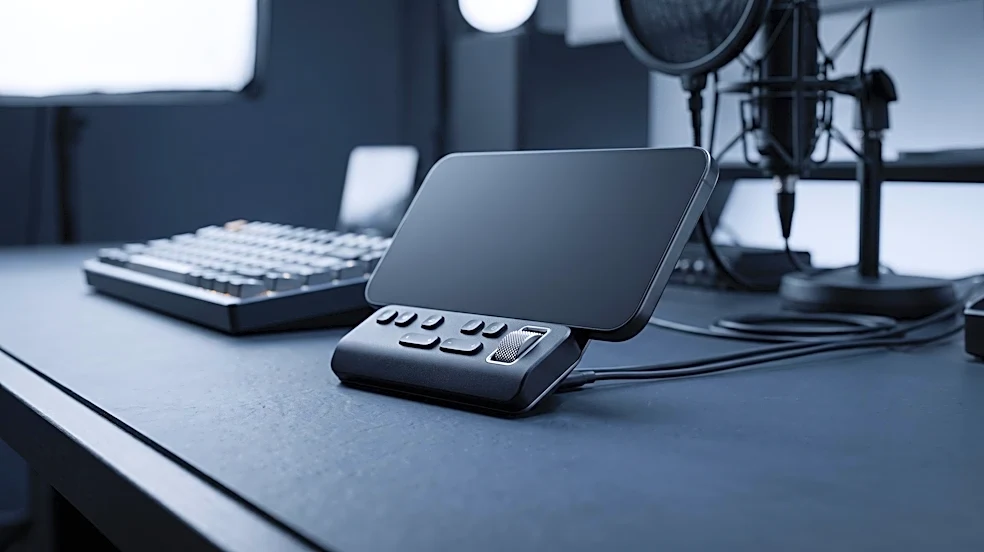
Voicemod has launched the Key Pocket, a new physical device designed to bring its voice-changing technology to mobile users for streaming and gaming. The Key Pocket, available for preorder at $130, is a compact soundboard that magnetically attaches to the back
of phones. It functions as a controller interface for Voicemod's voice-changing applications, allowing users to switch between voices and audio effects with its buttons and adjust volume with a wheel. The device processes all voice modifications locally and in real-time, ensuring privacy and performance. It works in conjunction with the Voicemod app, which offers access to over 200 original voices, more than 76,000 community-created voices, and over 800,000 user-generated sounds and memes. Beyond phones, the Key Pocket is compatible with tablets and various gaming consoles, including PS4, PS5, Xbox Series X/S, Nintendo Switch 2, and Meta Quest 2, 3, and 3S headsets, connecting via USB-C, 3.5mm ports, or Bluetooth. This development aims to expand the concept of 'sonic identity' for online expression.
Why It's Important?
The introduction of the Voicemod Key Pocket signifies a notable advancement in personal expression within the digital realm, particularly for the U.S. gaming and streaming communities. By offering a portable and tactile solution for voice modification, Voicemod addresses a range of user needs, from enhancing entertainment and anonymity to providing accessibility for individuals with vocal cord issues. This technology can empower streamers and gamers to cultivate a unique 'sonic identity,' mirroring the customization seen in visual avatars and skins. For those with feminine-pitched voices, it offers a tool to mitigate online harassment, fostering a more inclusive environment. Furthermore, the device's local processing of voice changes prioritizes user privacy, a growing concern in an era of increasing digital surveillance and AI-driven voice spoofing. The Key Pocket's broad compatibility across mobile and console platforms also expands its market reach, potentially influencing how a wider demographic engages with voice-changing technology in their daily digital interactions.
What's Next?
Voicemod's future plans extend beyond the Key Pocket, aiming to integrate their voice-changing technology at a system level across devices. This would allow users to modify their 'aural appearance' anywhere on a computer or phone, not just within specific gaming or streaming applications. Such integration could broaden the application of voice modification to professional settings, like work video calls, offering new avenues for expression and accessibility. The company also envisions leveraging large language models (LLMs) as an assistant to help users find desired voice effects, for example, by simply typing a request like 'I want the voice of SpongeBob.' While the Key Pocket provides a tactile control solution for immediate and precise adjustments, the long-term goal is to make the technology seamlessly available without dedicated hardware. This strategic direction suggests a future where voice customization becomes an inherent feature of digital communication, continually evolving to meet diverse user needs and preferences.
Beyond the Headlines
The emergence of devices like the Voicemod Key Pocket highlights a deeper societal shift towards the customization and control of one's digital identity, extending beyond visual representation to 'sonic identity.' This trend raises ethical considerations regarding authenticity and potential misuse, particularly in an age where AI can generate highly convincing voice spoofs. However, it also underscores the profound impact of technology on accessibility and personal empowerment. For individuals who have lost their voice due to health issues, as exemplified by the streamer at TwitchCon 2025, such technology offers a means to regain a crucial aspect of their communication and identity. The emphasis on local processing for privacy also reflects a growing awareness of data security in personal technology. As voice-changing tech becomes more ubiquitous, it could reshape social interactions, entertainment, and even professional communication, prompting ongoing discussions about digital ethics, identity, and the evolving nature of human expression in a technologically advanced world.