
What's Happening?
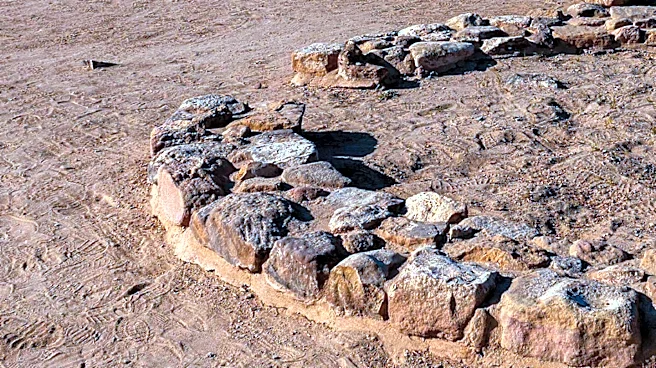
Construction workers in Slovakia have uncovered a Roman military camp dating back to the second century C.E. during the construction of an industrial park. The site, located in Šurany, is believed to be linked
to the Marcomannic Wars, which took place from 166 to 180 C.E. Archaeologists have identified the camp as a Roman marching camp, featuring five entrance gates, fortifications, and a unique 'clavicula' entrance. The discovery includes artifacts such as military sandals, spears, and helmet fragments, as well as skeletal remains believed to be Roman soldiers. This find provides new insights into Roman military activities north of the Danube River during this period.
Why It's Important?
The discovery of the Roman military camp in Slovakia is significant for historians and archaeologists as it fills a crucial gap in the understanding of Roman military operations in the region. The artifacts and remains found at the site offer valuable information about the Roman presence and their interactions with Germanic tribes during the Marcomannic Wars. This find not only enhances the historical narrative of Roman expansion but also contributes to the broader understanding of Roman military strategy and infrastructure. The preservation of such sites is essential for cultural heritage and provides opportunities for further research and education.
What's Next?
The artifacts from the site have been transported to the Institute of Archaeology for preservation and further study. Researchers plan to conduct various analyses, including radiocarbon dating and archaeogenetic exploration, in collaboration with international facilities. These studies aim to answer questions about the individuals buried at the site, the cause of their deaths, and the broader historical context of the camp. The findings could lead to new discoveries about Roman military history and influence future archaeological research in the region.