




What's Happening?
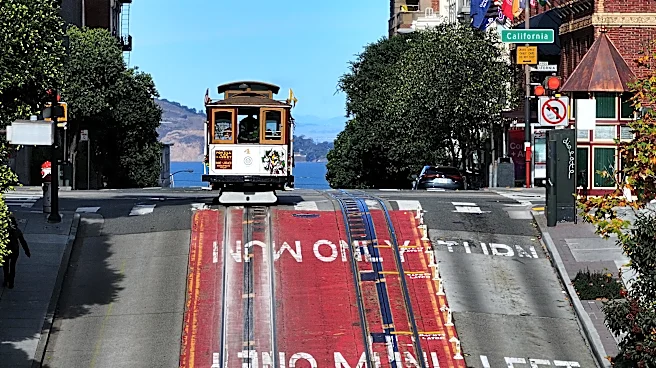
Voters in five Bay Area counties—Alameda, Contra Costa, San Francisco, San Mateo, and Santa Clara—have approved the Regional Transit Measure (RTM), introducing new sales taxes to prevent transit service cuts. This measure includes a 1% sales tax in San Francisco and a 0.5%
sales tax in the other four counties, set to last 14 years. These sales taxes are scheduled to take effect on April 1, 2027, and will apply to items already subject to California sales tax, such as food, clothes, and furniture. Additionally, San Francisco voters approved Proposition H, a 15-year parcel tax on property owners, which will fund Muni transit operations and administration. This parcel tax will appear on San Francisco property tax bills for the 2027-28 fiscal year, with most single-family residential owners facing a $129 charge in the first year, increasing with inflation. Landlords of rent-controlled units may pass up to 50% of this tax, capped at $65 per unit annually, onto renters.
Why It's Important?
These newly approved taxes are critical for the financial stability of Bay Area transit agencies, which have faced significant budget deficits due to pandemic-era drops in ridership. The RTM sales tax is projected to generate approximately $1 billion annually, with funds supporting major transit providers like BART, Muni, AC Transit, and Caltrain, as well as smaller operators. This revenue is specifically earmarked for transit operations, including salaries and fleet maintenance, aiming to restore and maintain current service levels. Proposition H is expected to contribute an additional $177 million annually to Muni. The implementation of these taxes means that residents and consumers in these counties will see an increase in the cost of goods and services, directly impacting household budgets. The measures represent a significant public investment in regional transportation infrastructure, crucial for economic activity and daily commutes in one of the nation's most populous and economically vital regions.
What's Next?
The Public Transit Revenue Measure District, composed of the Metropolitan Transportation Committee Board of Directors, is slated to certify the election results and adopt an ordinance imposing the RTM sales tax in early December. The additional sales tax will officially kick in on April 1, 2027, with the first allocations to transit agencies expected by July 1, 2027. For San Francisco property owners, the first Proposition H parcel tax will appear on property tax bills for the 2027-28 fiscal year, mailed in fall 2027. Exemptions for seniors, SRO unit owners, and properties already exempt from property taxes are available, with an application deadline of June 1, 2027. The RTM sales tax is set to expire on April 1, 2041, and the Proposition H parcel tax on June 30, 2042. Advocates plan to seek state and federal funding in the interim to ensure long-term transit stability.
Beyond the Headlines
The approval of these transit funding measures reflects a broader trend of local communities taking direct action to address infrastructure and service needs, often through increased taxation. This move underscores the challenges faced by public transit systems nationwide in securing sustainable funding, especially in the wake of changing ridership patterns. The ability of landlords to pass a portion of the parcel tax onto renters highlights the complex interplay between property taxation, housing costs, and affordability, potentially impacting a significant portion of the Bay Area's population. The long-term success of these measures will depend not only on the revenue generated but also on the efficient allocation and management of funds by transit agencies, and their ability to adapt to future transportation demands and technological advancements. This also sets a precedent for how other metropolitan areas might approach funding their public services.