








What's Happening?
A randomized controlled trial has indicated that weight loss achieved during intermittent fasting, rather than the quality of the Mediterranean diet alone, is associated with lower inflammation. The study explored the mechanisms behind the Mediterranean diet's
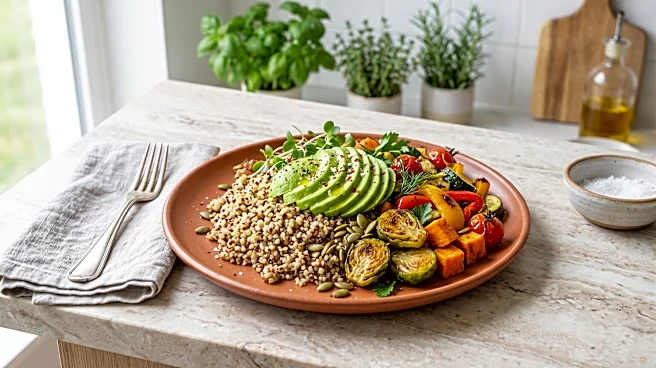
health benefits, particularly its anti-inflammatory effects. Fifty-three adults with metabolic risk factors, with an average age of 55, were assigned to either a fully provided Mediterranean diet rich in extra virgin olive oil, vegetables, legumes, and whole grains, or their usual Western diet for eight weeks. During this initial phase, energy intake was adjusted to maintain stable body weight. While the Mediterranean diet reduced triglyceride levels by 22% and total and LDL cholesterol by 6% and 7% respectively, it did not significantly alter high-sensitivity C-reactive protein, a primary marker of low-grade inflammation. It was only after two fasting days per week were introduced for an additional eight weeks, leading to greater weight loss in the Mediterranean diet group, that C-reactive protein levels decreased compared to controls. This reduction was accompanied by lower blood pressure, improved insulin sensitivity, and reduced inflammatory signaling in the intestinal mucosa.
Why It's Important?
This research provides a more nuanced understanding of how the Mediterranean diet impacts health, particularly regarding inflammation. While the diet is consistently linked to healthier aging and improved lipid profiles, this study suggests that its anti-inflammatory benefits may be significantly mediated by weight loss rather than solely by the dietary composition itself. This distinction is crucial for public health recommendations and dietary interventions. It implies that simply adhering to a high-quality Mediterranean diet without achieving a caloric deficit and subsequent weight loss might not yield the expected anti-inflammatory outcomes. For individuals seeking to reduce inflammation, this finding underscores the importance of energy balance and weight management as key components of a healthy lifestyle, even when adopting a diet known for its health benefits. This could influence how healthcare professionals advise patients on dietary strategies for managing inflammatory conditions.
What's Next?
Future research is needed to further explore the interplay between dietary quality, weight loss, and inflammation, especially in diverse populations. The trial was conducted in middle-aged adults, and given that weight loss in older individuals requires careful management to preserve muscle mass, subsequent studies should investigate whether combining a Mediterranean diet with muscle-preserving strategies can deliver both anti-inflammatory benefits and muscle maintenance in older populations. This would help refine dietary guidelines to be more effective and safe across different age groups. Additionally, further randomized controlled trials are necessary to confirm these findings and to elucidate the specific mechanisms through which weight loss influences inflammatory markers in the context of various dietary patterns. This could lead to more targeted and personalized nutritional advice for inflammation management.
Beyond the Headlines
This study challenges the simplistic view that certain 'healthy' diets inherently reduce inflammation regardless of caloric intake or weight changes. It highlights the complex physiological interactions between diet, energy balance, and systemic inflammation. The findings suggest that the benefits often attributed solely to specific food components might be intertwined with broader metabolic shifts induced by weight reduction. This could lead to a re-evaluation of how dietary interventions are designed and communicated, emphasizing the importance of achieving a healthy weight alongside consuming nutrient-dense foods. Ethically, it reinforces the need for evidence-based dietary advice that considers the full spectrum of metabolic effects, rather than promoting diets based on isolated benefits. Culturally, it may shift perceptions of 'healthy eating' to include a greater focus on energy balance and weight management as integral components of an anti-inflammatory lifestyle.