






What's Happening?
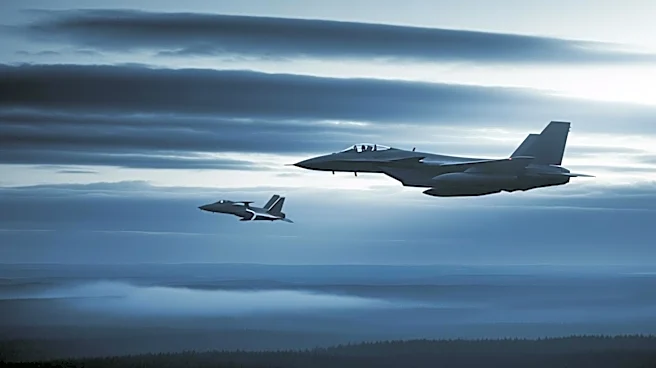
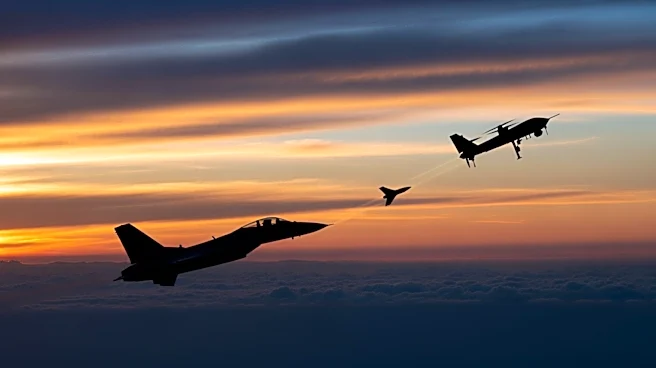
A French military Rafale fighter jet, part of the NATO Baltic Air Police mission, shot down a drone that entered Latvia's airspace from Russia. The incident occurred on Monday and is the latest in a series of security breaches along Europe's eastern borders.
The Latvian army reported that the drone entered from Russia due to Russian electromagnetic warfare. The decision to shoot down the drone was made by NATO command, and the action was praised by Latvian Prime Minister Andris Kulbergs for its swift execution. The drone was intercepted near the village of Berzekne, approximately 30 kilometers from the Russian border. No injuries or property damage were reported. This incident has heightened concerns about the potential spillover of Russia's war in Ukraine into NATO territories.
Why It's Important?
The incident underscores the escalating tensions between NATO and Russia, particularly in the context of the ongoing conflict in Ukraine. The use of drones and electromagnetic warfare by Russia poses a significant threat to the security of NATO member states, especially those bordering Russia. This event highlights NATO's readiness to defend its airspace and the importance of maintaining robust defense mechanisms in the region. The situation also reflects the broader geopolitical struggle and the potential for further military engagements, which could have serious implications for international security and stability. The involvement of NATO forces in such incidents could lead to increased military presence and heightened alert levels in the region.
What's Next?
NATO is likely to continue strengthening its air defense systems and increase surveillance along its eastern borders to prevent further incursions. The alliance may also engage in diplomatic efforts to address the security concerns raised by these incidents. Additionally, there could be discussions within NATO about enhancing cooperation and coordination among member states to effectively respond to such threats. The situation may prompt further military exercises and readiness drills in the region to ensure preparedness for any future incidents.
Beyond the Headlines
The incident raises questions about the effectiveness of current international agreements and protocols in managing airspace security and preventing military escalations. It also highlights the challenges of dealing with modern warfare tactics, such as electromagnetic interference, which complicate traditional defense strategies. The ongoing conflict in Ukraine and its spillover effects into neighboring countries could lead to a reevaluation of NATO's strategic priorities and defense policies. This situation may also influence public opinion and political discourse regarding military spending and international alliances.