







What's Happening?
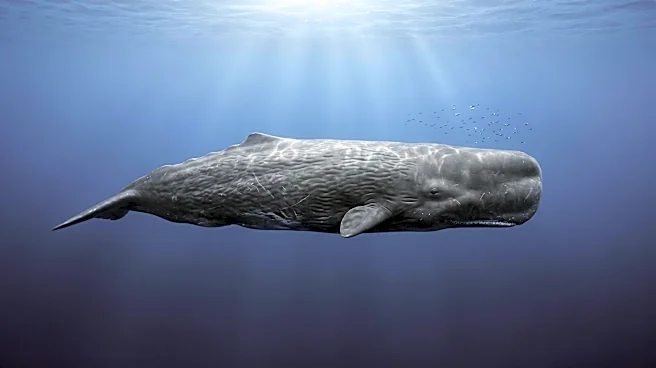
The notion of a human surviving inside a whale, a recurring theme in literature and film, has been thoroughly debunked by whale biologists and comparative anatomists. Shane Gero, a whale biologist and Lead Biologist at Project CETI, states that while
a very large sperm whale might anatomically be able to ingest a slender human, it is highly improbable, especially with scuba gear. Even if ingestion occurred, survival is virtually impossible. Gero explains that a human would likely drown immediately from the rush of water or be crushed. Furthermore, sperm whales primarily feed on boneless squid, making a human a choking hazard for the whale. Dr. Joy Reidenberg, a comparative anatomist, details that a sperm whale's stomach has four chambers designed for mashing food with thick, muscular tissue and contains acids and gases, rendering it uninhabitable. The idea of finding solid structures to aid escape within the stomach is also dismissed, as the walls are wet, slimy, and squishy, with the only rigid structure being the larynx, which would be difficult to access and utilize for escape. The scientific consensus is that such a scenario, while captivating for storytelling, is not grounded in biological reality.
Why It's Important?
This scientific clarification is important because it distinguishes between popular fiction and biological fact, particularly concerning marine life. The enduring myth of human survival inside a whale, perpetuated by stories like Jonah and Pinocchio, can create misconceptions about whale behavior and physiology. Understanding the true nature of these interactions helps foster a more accurate public perception of marine ecosystems and the animals within them. It underscores the vast differences between human and whale biology, highlighting the specialized adaptations whales possess for their deep-sea existence. This information also serves to educate the public about the actual dangers of the ocean and the unlikelihood of such fantastical encounters, promoting a more informed appreciation for marine biology rather than sensationalized narratives. It also subtly reinforces the idea that humans are not prey for whales, which are generally gentle giants, countering any latent fears or misunderstandings about their interactions with humans.
What's Next?
As new films like 'Whalefall' continue to explore this fictional premise, the scientific community will likely continue to provide accurate biological context to counter popular narratives. Biologists like Shane Gero hope that such fictional works can still spark genuine curiosity about whales, leading audiences to seek out factual information about these intelligent creatures. Organizations like Project CETI, which Gero is involved with, are actively working to decipher whale communication, aiming to deepen human understanding of these animals. The ongoing effort to educate the public about marine biology will involve continued outreach through scientific articles, documentaries, and expert commentary, ensuring that scientific accuracy remains accessible alongside popular entertainment. This ongoing dialogue between science and popular culture will help shape public understanding and appreciation for marine life.
Beyond the Headlines
The persistence of the 'swallowed by a whale' narrative in human culture speaks to deeper themes of survival, redemption, and the unknown depths of nature. It reflects a human fascination with overcoming insurmountable odds and confronting primal fears. Ethically, the scientific debunking of such myths encourages a more responsible approach to storytelling, where creative license is balanced with factual accuracy, especially when depicting real-world animals. Legally, while not directly applicable, the emphasis on scientific truth can inform regulations around wildlife depiction in media, promoting accuracy over sensationalism. Culturally, these stories often serve as allegories, but their literal interpretation can obscure the true nature of whales, which are often victims of human activity rather than monstrous predators. Understanding the biological impossibility helps shift the narrative towards conservation and respect for these creatures, rather than perpetuating fear-based myths.