






What's Happening?
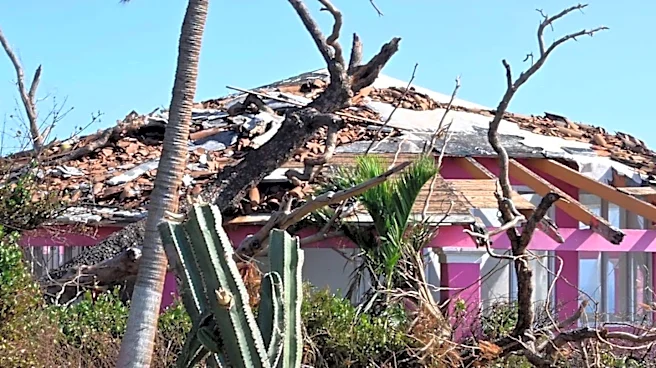
Wyandotte County, Kansas, is facing significant property damage following severe thunderstorms that brought 70-MPH winds and golf-ball-sized hail. The storms, which occurred on Tuesday night and early Wednesday morning, splintered power poles, tore roofs
off homes, and damaged vehicles. As of Thursday evening, 9,000 homes and businesses in Kansas City, Kansas, remained without power. Despite the extensive damage, county officials are not optimistic about receiving assistance from the Federal Emergency Management Agency (FEMA). This is due to the requirement of meeting a statewide damage threshold for federal aid, which is currently set at $5.7 million for individual assistance. The storm's impact was largely isolated to Wyandotte County, which has relatively lower property values, making it challenging to reach the state-mandated financial benchmark for federal intervention. Unified Government Emergency Management Director Jennifer Tarwater noted that while the damage is dire for affected residents, its localized nature makes federal assistance unlikely.
Why It's Important?
The situation in Wyandotte County highlights a critical challenge faced by communities with localized disaster damage, particularly those with lower property values. The federal disaster aid system, which relies on statewide damage thresholds, can inadvertently exclude areas that experience significant, yet geographically contained, destruction. This means that residents and local governments in such areas are left to bear the financial burden of recovery without federal support. For Wyandotte County, a budget-strapped entity, the lack of FEMA assistance translates into a prolonged and more difficult recovery process. It also underscores the disparity in disaster response capabilities between wealthier and less affluent regions, as the latter may struggle to meet the high financial benchmarks required for federal intervention, even when their communities are severely impacted. The reliance on volunteers for debris removal, as called for by Unified Government leaders, further illustrates the strain on local resources.
What's Next?
Damage assessments are ongoing in Wyandotte County, with officials meticulously documenting all impacts to schools, parks, and the power grid. This comprehensive assessment is crucial as certain dollar amounts unlock emergency funds and procedures at the county level. If the county reaches $822,000 in damages, it can declare a County Emergency, which would streamline procurement processes and allow for overtime for county employees. However, this declaration would not introduce new money into the county. Unified Government leaders, including Commissioner Melissa Bynum, are actively calling for volunteers to assist with debris removal, particularly those with chainsaws and the ability to use them safely. The focus will remain on local efforts and community support to manage the recovery, given the low probability of federal assistance. The long-term recovery for residents and businesses will depend heavily on local resources and community resilience.
Beyond the Headlines
This event brings to light the broader implications of federal disaster relief policies and their impact on local communities. The current system, designed to address widespread catastrophes, may not adequately serve areas experiencing intense, localized disasters. This can lead to a sense of abandonment among affected residents and exacerbate existing socio-economic disparities. The reliance on property values to determine aid thresholds can disproportionately affect communities with lower-income populations, where individual losses, though significant to those affected, may not collectively meet the high financial bar for federal intervention. This raises questions about the equity and effectiveness of current disaster aid frameworks and whether adjustments are needed to better support all communities, regardless of their economic standing or the geographic spread of a disaster. It also highlights the critical role of local emergency management and community-led initiatives in the absence of federal support.