





What's Happening?
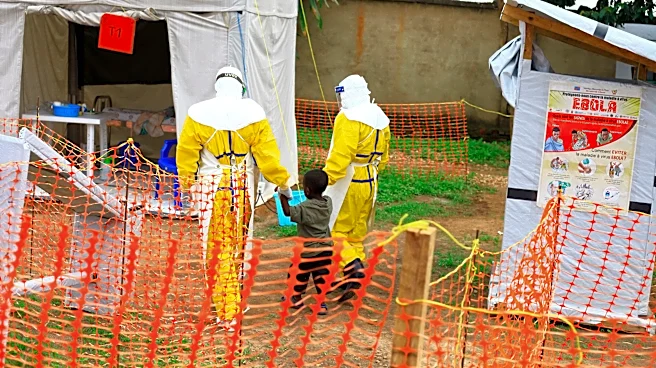
The Democratic Republic of Congo is grappling with a severe Ebola outbreak in its eastern province of Ituri, with at least 80 deaths reported. The outbreak, which was first announced with 65 deaths and 246 suspected cases, has seen a rapid increase in fatalities.
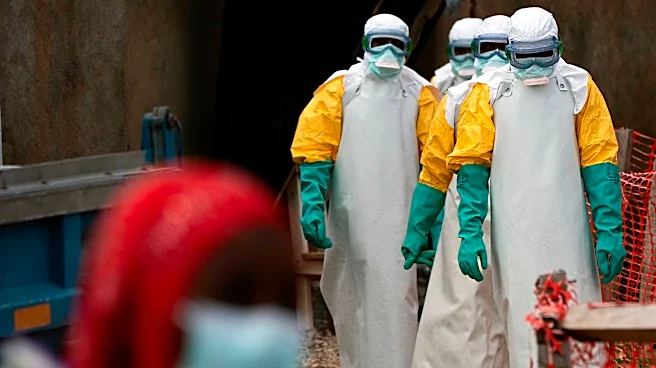
Health workers are intensifying efforts to screen and trace contacts to contain the disease. The Bundibugyo virus, a variant of Ebola, has been identified in this outbreak, marking Congo's 17th Ebola outbreak since the virus first emerged in 1976. The suspected index case is a nurse who died in Bunia, the capital of Ituri. The outbreak has also affected neighboring Uganda, where a case was confirmed and the patient subsequently died. The Africa Centers for Disease Control and Prevention has expressed concern over the potential spread to nearby regions, including Uganda and South Sudan.
Why It's Important?
The outbreak poses significant public health challenges for Congo and its neighbors. Ebola is a highly contagious and often fatal disease, and its spread could have severe implications for regional health systems already strained by other health crises. The proximity of the outbreak to Uganda and South Sudan raises the risk of cross-border transmission, which could lead to a broader regional health emergency. The situation underscores the need for robust international support and coordination to manage the outbreak effectively. The logistical challenges in delivering medical expertise and supplies to remote and conflict-affected areas in Congo further complicate containment efforts.
What's Next?
Efforts to contain the outbreak will likely involve increased international collaboration and support, particularly from organizations like the World Health Organization and the International Federation of Red Cross and Red Crescent Societies. Enhanced surveillance and screening at border points are expected to prevent further spread. The Congolese government, along with international partners, will need to address logistical challenges to ensure timely delivery of medical supplies and personnel to affected areas. The situation may prompt neighboring countries to bolster their preparedness and response plans to mitigate the risk of importation and spread of the virus.