







What's Happening?
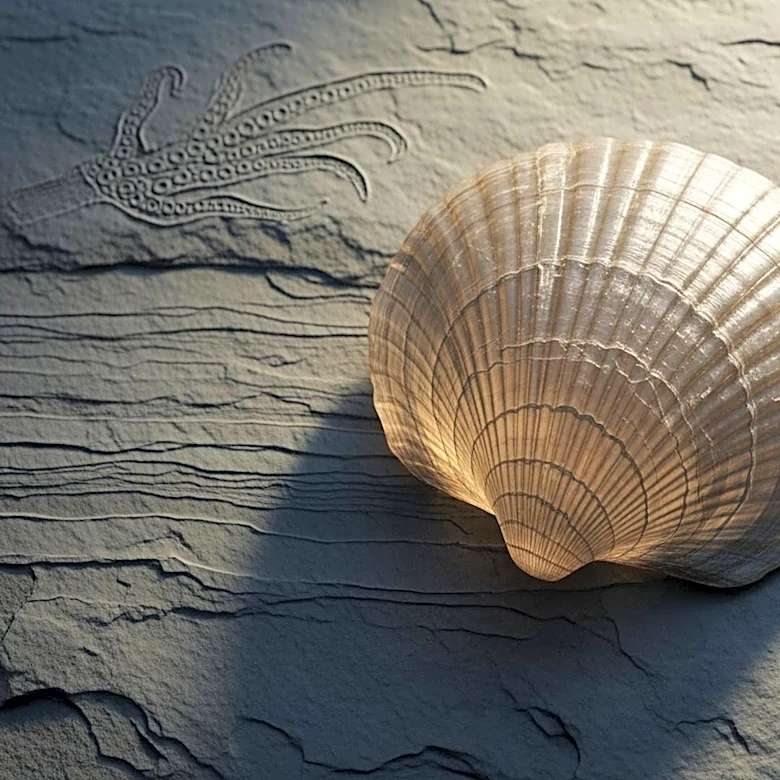
Recent research has led to a significant reidentification of a fossil previously thought to be the world's oldest octopus. The fossil, originally discovered in the Mazon Creek fossil beds in Illinois, was reexamined using synchrotron imaging, revealing
it to be a nautilus relative rather than an octopus. This discovery, published in the journal Proceedings of the Royal Society B, suggests that octopuses appeared much later in the Jurassic period, rather than 300 million years ago as previously believed. The fossil, now identified as Paleocadmus pohli, represents the oldest known nautiloid soft tissue preservation, pushing back the record by approximately 220 million years.
Why It's Important?
This reidentification has profound implications for the scientific understanding of cephalopod evolution. By placing the emergence of octopuses in the Jurassic period, it aligns with the broader scientific consensus regarding the timeline of cephalopod evolution. This discovery not only corrects a long-standing misconception but also provides new insights into the evolutionary history of marine life. The findings highlight the importance of advanced imaging techniques in paleontology, offering a more accurate picture of ancient life forms and their development over millions of years.
What's Next?
The use of synchrotron imaging in this study sets a precedent for future paleontological research, potentially leading to more reexaminations of controversial fossils. As technology advances, similar techniques may uncover further insights into the evolutionary history of other species. Researchers may continue to explore the Mazon Creek site and other fossil beds for additional specimens that could further illuminate the evolutionary timeline of cephalopods and other marine organisms.