
What's Happening?
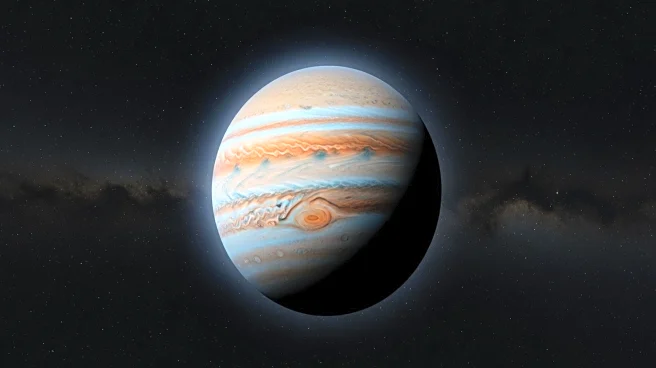
Jupiter is set to reach opposition on January 10, offering a prime viewing opportunity for astronomers and skywatchers. During opposition, Jupiter will be closest to Earth, appearing brighter and larger
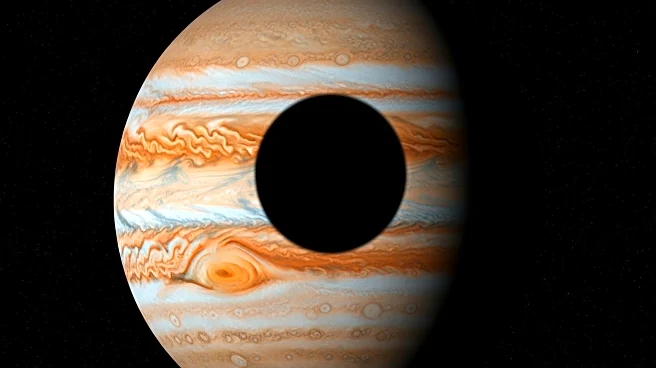
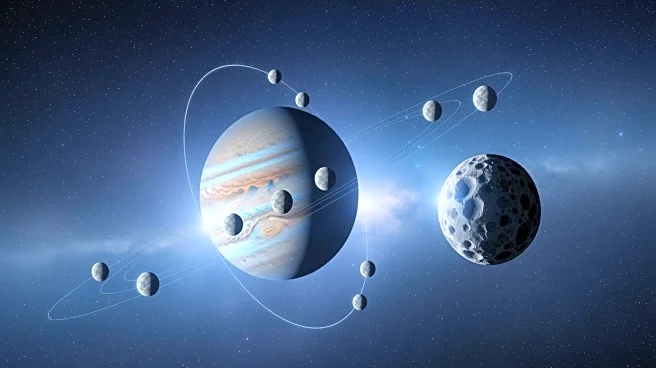
in the night sky. This celestial event allows for detailed observation of the planet's features, including its Great Red Spot and numerous belts and zones. The opposition also provides a chance to observe Jupiter's four largest moons, known as the Galilean moons, which will be visible with binoculars or a small telescope. The event is part of a broader period of visibility that began in November and will continue into the coming months.
Why It's Important?
Jupiter's opposition is a significant event for both amateur and professional astronomers, as it provides a rare opportunity to study the planet's atmospheric dynamics and its moons in detail. The event enhances public interest in astronomy, encouraging educational outreach and engagement with the night sky. For scientists, the opposition offers a chance to gather data that can contribute to our understanding of planetary systems and atmospheric phenomena. The visibility of Jupiter's moons also allows for observations that can inform studies on gravitational interactions and orbital mechanics.
What's Next?
Following the opposition, Jupiter will continue to be a prominent feature in the night sky, with several key dates offering optimal viewing conditions for its moons. As the planet moves through its retrograde motion, astronomers will have opportunities to observe mutual events among the moons, such as eclipses and transits. These events provide additional data for scientific analysis and public observation. The ongoing visibility of Jupiter will likely sustain interest in planetary observation, fostering a deeper appreciation for celestial phenomena.