





What's Happening?
The MIM-104 Patriot system, originally designed in the 1960s as an anti-aircraft platform, has evolved into a sophisticated air and missile defense system. The system's development has been marked by significant technological advancements, particularly
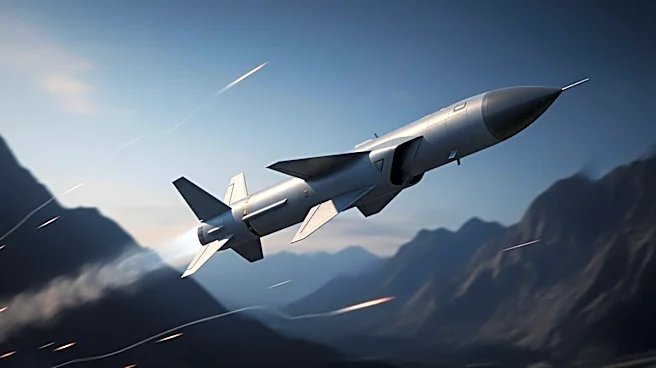
in its transition from the PAC-2 to the PAC-3 MSE versions. The PAC-2 version utilized a fragmentation warhead designed to detonate near targets, creating a shrapnel cloud to neutralize threats. In contrast, the PAC-3 MSE employs a hit-to-kill technology, using kinetic energy to destroy targets directly. This shift represents a major advancement in defense technology, allowing for more precise and effective interception of ballistic missiles. The system's radar technology, particularly the AN/MPQ-65 radar, has also seen improvements, enhancing its ability to track and engage multiple targets simultaneously.
Why It's Important?
The advancements in the Patriot system are crucial for modern defense strategies, particularly in countering advanced threats such as hypersonic missiles and UAV swarms. The shift to kinetic energy-based interception with the PAC-3 MSE enhances the system's effectiveness against ballistic missiles, reducing the risk of collateral damage from fragmentation. This makes the Patriot system a vital component of integrated air and missile defense strategies, especially in regions facing complex aerial threats. The system's ability to integrate with other defense technologies and its resilience against electronic warfare further solidify its role in national and international defense frameworks. The high cost of munitions, however, poses a challenge, necessitating its use within a multi-layered defense system to ensure cost-effectiveness and sustainability.
What's Next?
Future developments for the Patriot system include the integration of the Lower Tier Air and Missile Defense Sensor (LTAMDS) and the Integrated Battle Command System (IBCS). These technologies aim to enhance the system's detection range and operational flexibility, allowing for 360-degree coverage and improved interoperability with other defense assets. The continued evolution of the Patriot system is expected to maintain its relevance in global defense strategies, particularly as threats continue to evolve. The focus will likely remain on improving cost-efficiency and expanding the system's capabilities to address emerging threats effectively.
Beyond the Headlines
The evolution of the Patriot system highlights broader trends in military technology, emphasizing the importance of precision and integration in modern defense systems. The shift from fragmentation to kinetic energy-based interception reflects a growing emphasis on minimizing collateral damage and enhancing target accuracy. Additionally, the system's development underscores the challenges of maintaining technological superiority in the face of rapidly advancing threats. The need for continuous updates and integration with other systems points to a future where defense strategies are increasingly networked and reliant on real-time data sharing.