






What's Happening?
The Bodie Mine in rural north-central Washington has become the first site to be cleaned up under the Good Samaritan Remediation Abandoned Hard-Rock Mines Act of 2024. This new law addresses liability issues that previously hindered the cleanup of tens
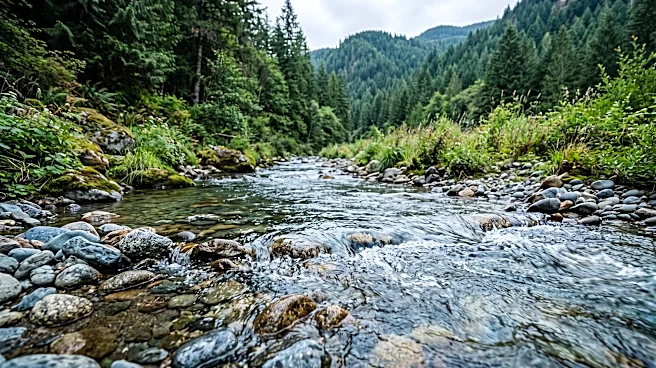
of thousands of abandoned mines across the U.S. The Bodie Mine, which had been contaminating Toroda Creek with heavy metals for decades, saw 790 tons of mine tailings removed and the stream rehabilitated by Trout Unlimited. The project, funded by various sources including the EPA and corporate partners, demonstrates the law's effectiveness in allowing non-liable entities to undertake environmental remediation without assuming future legal responsibility.
Why It's Important?
The successful cleanup of the Bodie Mine under the new Good Samaritan law marks a significant step forward in addressing widespread environmental contamination from abandoned hard-rock mines. These mines pose substantial risks to water quality, ecosystems, and public health across the nation. By removing the deterrent of liability, the law enables environmental organizations, state agencies, and other 'Good Samaritans' to tackle these long-standing pollution sources. This initiative is crucial for restoring natural habitats, particularly for species like salmon in the Columbia River system, and for protecting communities from toxic exposure. The law's pilot program, though limited to 15 projects over seven years, aims to prove the concept for broader implementation, highlighting a critical need for scalable solutions to a pervasive environmental problem.
What's Next?
Following the success at Bodie Mine, Trout Unlimited and other organizations anticipate submitting more applications for cleanup projects under the Good Samaritan law, potentially for the 2027 field season. The pilot program's goal is to demonstrate the viability and safety of such cleanups, paving the way for Congress to fully authorize and expand the program. However, funding remains a significant hurdle, as the current law only permits a limited number of projects, and the scale of the problem far exceeds available resources. Advocates are pushing for a dedicated funding mechanism, similar to the tonnage fee for coal mining, to support a more comprehensive cleanup effort for hard-rock mines. This would involve legislative action to ensure long-term financial sustainability for these critical environmental remediation projects.
Beyond the Headlines
The Good Samaritan law addresses a complex legal and environmental challenge rooted in historical mining practices. The issue of 'orphan' mines, where original operators are long gone or bankrupt, has left a legacy of pollution with no clear responsible party. This law represents an innovative approach to environmental governance, shifting from punitive liability to facilitative remediation. It also highlights the ongoing tension between resource extraction and environmental protection, particularly as the U.S. considers a new boom in domestic mining for critical minerals. The success of this law could set a precedent for addressing other types of legacy pollution and encourage collaborative efforts between government, non-profits, and industry to tackle complex environmental issues. It underscores the importance of proactive policy-making to prevent future environmental liabilities while addressing past ones.