






What's Happening?
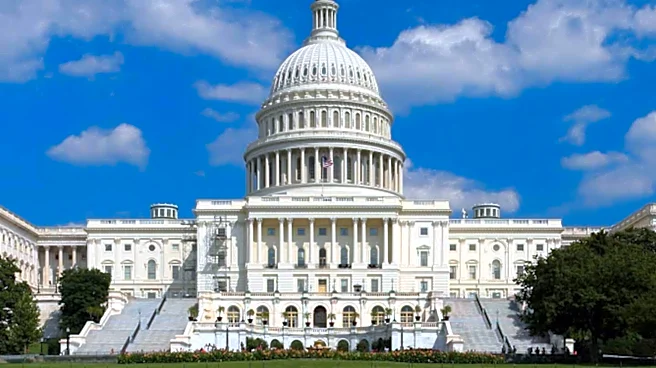
The House of Representatives has passed a resolution condemning socialism, with a vote of 220-192. This move is described as an election-year strategy by Republicans to force Democrats into an uncomfortable vote, particularly as far-left candidates have
gained traction in Democratic primaries. House Republican Conference Chair Lisa McClain (R-Mich.) was present at a news conference where House Majority Leader Steve Scalise (R-La.) stated that the vote aimed to draw a contrast, not only denouncing socialism but also the idea of non-citizens voting in U.S. elections. The resolution is nonbinding, meaning it does not carry the force of law, and Democrats have criticized it as a political stunt designed to create talking points for the upcoming campaign trail. The measure nearly failed a procedural vote earlier in the day due to some conservative Republican dissent but was ultimately advanced with the support of two Democratic representatives.
Why It's Important?
This House vote to condemn socialism is highly significant in the context of current U.S. political discourse, especially leading up to the midterm elections. It highlights a key ideological battleground between the Republican and Democratic parties. Republicans are actively seeking to frame the Democratic Party as increasingly aligned with socialist ideologies, particularly as candidates endorsed by the Democratic Socialists of America have won primaries. This strategy aims to capitalize on public apprehension towards socialism and to energize conservative voters. For Democrats, the vote presents a challenge, as they must navigate accusations of being 'far-left' while trying to appeal to a broader electorate. The nonbinding nature of the resolution underscores its primary purpose as a messaging tool, designed to influence public perception and shape the narrative of the upcoming elections rather than enact direct policy changes. This political maneuver could significantly impact campaign strategies and voter turnout.
What's Next?
The resolution condemning socialism is expected to become a prominent talking point for Republican candidates on the campaign trail leading up to the midterm elections. They will likely use the vote to draw a sharp contrast with their Democratic opponents, portraying them as out of touch with mainstream American values. Democrats, in response, will likely continue to dismiss the resolution as a political stunt and focus on their own policy platforms, attempting to reframe the debate away from ideological labels. The outcome of the midterm elections will be a crucial indicator of how effectively this Republican strategy resonates with voters. Depending on the election results, this ideological battle could either intensify or diminish, influencing future legislative priorities and the overall direction of U.S. domestic policy. The debate over socialism's role in American society is likely to remain a contentious issue.
Beyond the Headlines
The House vote to condemn socialism reflects a deeper cultural and economic anxiety within the U.S. The term 'socialism' itself carries varied connotations, from advocating for social safety nets to implying more radical economic restructuring. Republicans are leveraging the negative historical associations of the term to create a political wedge, while some progressive Democrats are openly embracing certain socialist ideas, particularly in areas like healthcare and economic inequality. This ideological clash goes beyond mere policy differences; it touches upon fundamental questions about the role of government in the economy, individual liberty versus collective welfare, and the future direction of American capitalism. The use of such resolutions as messaging tools, rather than legislative instruments, underscores the increasing focus on narrative control and ideological warfare in contemporary U.S. politics, potentially further polarizing the electorate and making consensus-building more difficult.