






What's Happening?
State environmental and occupational safety agencies are increasingly setting the pace for compliance, expanding their enforcement authority and establishing requirements that often exceed federal standards. This shift is creating a complex compliance landscape
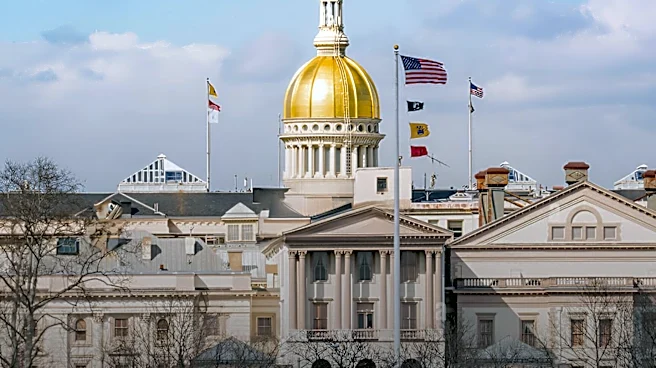
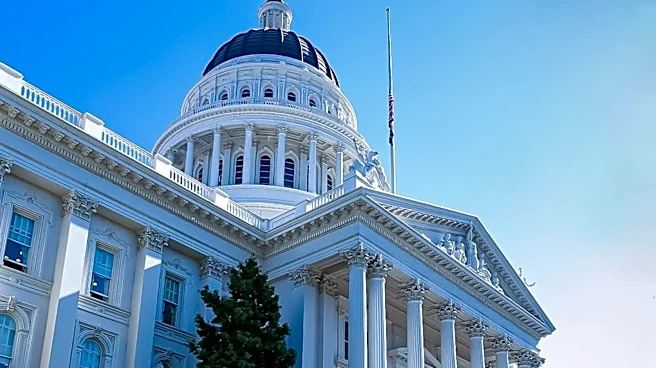
where organizations operating across multiple jurisdictions must meet diverse state-specific regulations, rather than relying solely on federal guidelines. The Environmental Council of the States has observed a consistent trend of states, including California, New York, New Jersey, and Washington, implementing stricter enforcement timelines and higher penalty structures for areas like air quality, chemical exposure, and hazardous waste management. This divergence means that a compliance program adequate in one state may be deficient in another, posing significant challenges for multi-site operators. Documentation deficiencies are a common trigger for escalated state-level enforcement, as state inspectors often require records in formats and specificities not typically produced by centralized systems designed for federal compliance.
Why It's Important?
This evolving regulatory environment has profound implications for businesses operating across state lines. The traditional assumption that meeting federal standards provides a defensible compliance position is no longer valid. Companies now face increased governance risks due to regulatory fragmentation, requiring board-level attention. The financial stakes are also rising, as state-level enforcement actions in high-scrutiny jurisdictions carry significantly higher penalties than in previous years. This necessitates a re-evaluation of compliance infrastructure investments, as the cost of proactive compliance is increasingly outweighed by the potential financial consequences of state enforcement. Furthermore, a workforce gap, where experienced staff are leaving and new employees take a long time to reach full compliance proficiency, exacerbates the challenge of navigating these nuanced, jurisdiction-specific requirements, turning it into a significant liability for organizations.
What's Next?
Organizations with multi-jurisdiction exposure are expected to restructure their compliance programs to explicitly map state-specific enforcement postures, prioritizing sites in aggressive regulatory environments for additional internal scrutiny. They will need to develop documentation systems capable of satisfying diverse state requirements without manual navigation. Formalized jurisdiction-specific knowledge transfer before experienced staff depart will also become crucial. The ASSP's 2026 Corporate Listening Tour Report suggests that organizations treating workforce instability as a permanent operating condition, rather than a temporary disruption, will perform better on compliance outcomes. Compliance leaders must assess whether their programs meet the requirements of their most aggressive state regulator on that regulator's timeline, as any uncertainty in this area represents a significant risk that needs immediate attention.
Beyond the Headlines
The shift towards state-led compliance highlights a broader trend of decentralization in regulatory authority, potentially leading to a patchwork of environmental and occupational safety standards across the U.S. This could foster innovation in some states, as they experiment with more stringent regulations, but also create competitive disadvantages for businesses operating in states with higher compliance burdens. The increased focus on documentation and the specific formats required by state inspectors could also drive technological advancements in compliance management systems. Ethically, this divergence raises questions about equitable protection for workers and the environment across different states, as well as the potential for regulatory arbitrage where companies might favor operating in states with less stringent oversight. The long-term implications could include a more fragmented national market for certain industries and a greater emphasis on localized legal and compliance expertise.