







What's Happening?
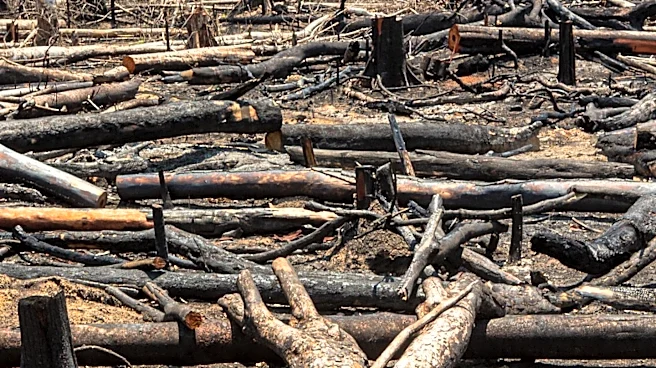
A two-month coordinated operation, dubbed Operation Madre Tierra, led by Interpol across nine Latin American and Caribbean countries, has revealed extensive industrial-scale wildlife and timber trafficking. The operation, conducted in June and July, resulted
in hundreds of arrests and the recovery of over 1,000 animals. Investigators identified sophisticated networks moving illegal timber and wildlife, including endangered species like Bengal tigers, lions, ocelots, and jaguars, along the Central and South American corridor. Many of these illicit products were destined for markets in Europe and Asia. Authorities also seized significant quantities of dried shark fins, cyanide, and mercury, the latter two used in illegal gold mining, highlighting the interconnectedness of various environmental crimes.
Why It's Important?
This operation underscores the severe threat that transnational environmental crime poses to global biodiversity and the rule of law. The industrial scale of these operations indicates highly organized criminal networks that exploit natural resources for significant profit, often with devastating ecological consequences. The seizure of toxic chemicals like cyanide and mercury, used in illegal gold mining, further highlights the broader environmental damage and health risks associated with these activities. The demand for exotic pets and wildlife products in international markets fuels this illicit trade, impacting vulnerable species and destabilizing ecosystems. The success of Operation Madre Tierra demonstrates the critical importance of international cooperation in combating these complex and far-reaching criminal enterprises.
What's Next?
Interpol and participating countries are expected to continue their collaborative efforts to dismantle these criminal networks. The intelligence gathered during Operation Madre Tierra will likely be used to trace financial transactions and identify the companies and individuals who finance and profit from these illegal trades, moving beyond the direct perpetrators. Increased international cooperation, intelligence sharing, and capacity building for law enforcement agencies in affected countries will be crucial. There may also be calls for stricter enforcement of wildlife trade regulations and increased public awareness campaigns in consumer markets to reduce demand for illegally sourced wildlife and timber products. The ongoing nature of these operations suggests a sustained commitment to combating environmental crime in the region.
Beyond the Headlines
The industrial scale of wildlife and timber trafficking revealed by Operation Madre Tierra points to deeper systemic issues, including corruption, weak governance, and economic disparities that can drive individuals and communities into illegal activities. The transnational nature of these crimes also highlights the challenges of jurisdiction and enforcement across borders, often requiring complex legal and diplomatic coordination. Beyond the immediate environmental impact, these criminal enterprises can fuel other illicit activities, such as drug trafficking, and undermine national security. Addressing these root causes requires a multi-faceted approach that includes not only law enforcement but also sustainable development initiatives, community engagement, and efforts to strengthen legal frameworks and institutions in affected regions. The ethical implications extend to the global responsibility to protect biodiversity and ensure environmental justice for communities impacted by these destructive practices.