



What's Happening?
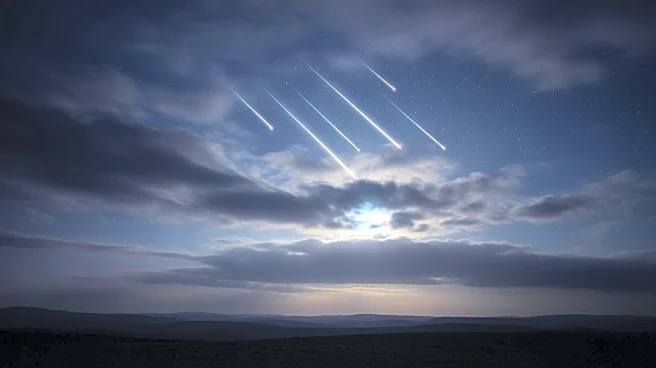
The Geminid meteor shower, known for its bright and colorful meteors, is reaching its peak activity this weekend, specifically on the night of December 13-14, 2025. This annual celestial event, which has been active since December 4, is expected to deliver
one of the most spectacular displays of shooting stars this year. However, weather forecasts for South Jersey predict a 70% chance of precipitation on the night of December 13, potentially impacting visibility. The precipitation, likely to be snow due to low temperatures, could result in 1 to 3 inches of snowfall, further obstructing the view of the meteor shower. The Geminids, originating from the asteroid 3200 Phaethon, are typically visible from the Northern Hemisphere, with optimal viewing conditions under dark skies away from city lights.
Why It's Important?
The Geminid meteor shower is a significant astronomical event, attracting skywatchers and astronomy enthusiasts across the globe. Its potential obstruction by weather conditions in South Jersey highlights the challenges faced by those hoping to witness such natural phenomena. The event's visibility is crucial for educational and recreational purposes, offering a unique opportunity for public engagement with astronomy. The meteor shower's peak coincides with a weekend, potentially increasing public interest and participation. However, adverse weather conditions could dampen this enthusiasm, affecting local tourism and related activities that benefit from such events.
What's Next?
If weather conditions improve, residents and visitors in South Jersey may still have a chance to view the Geminid meteor shower. Clear skies would allow for optimal viewing, especially in areas with minimal light pollution. For those unable to witness the event due to cloud cover, the meteor shower will continue until December 17, offering additional opportunities for observation. Additionally, the Ursids meteor shower is set to begin shortly after the Geminids, providing another chance for skywatchers to enjoy celestial displays. Local astronomy clubs and observatories may organize viewing events, contingent on weather conditions.