






What's Happening?
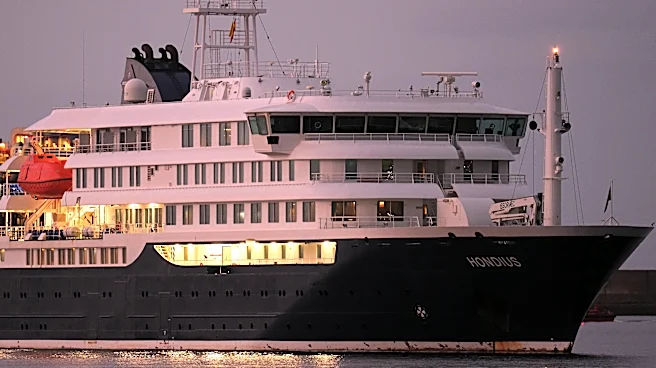
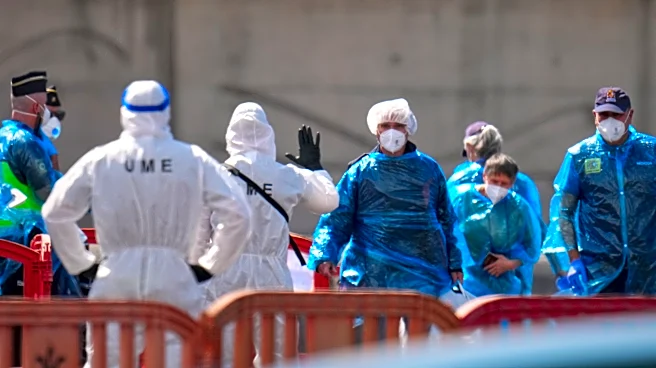
The Director-General of the World Health Organization (WHO), Dr. Tedros Adhanom Ghebreyesus, has issued a direct message to the people of Tenerife regarding the response to a hantavirus outbreak aboard the MV Hondius. The ship, carrying nearly 150 passengers
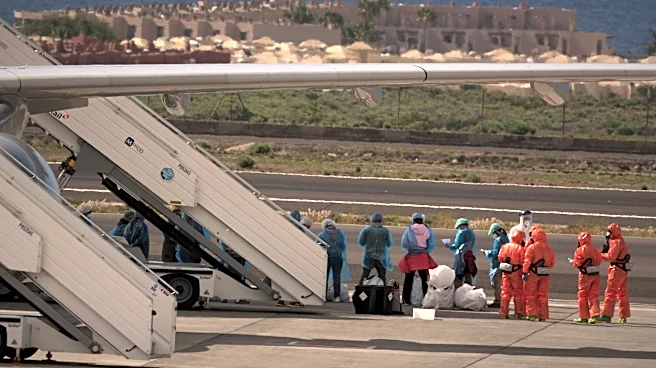
from 23 countries, has been directed to Tenerife due to its medical capacity and infrastructure. Dr. Tedros reassured the public that the risk of hantavirus to the local population is low, despite the seriousness of the virus, which has resulted in three fatalities. The WHO has coordinated with Spanish authorities to ensure that passengers are safely transported and repatriated without contact with the local population. Dr. Tedros praised Spain's decision to receive the ship as an act of solidarity and moral duty, highlighting the importance of international cooperation in public health crises.
Why It's Important?
This development underscores the critical role of international collaboration in managing public health emergencies. By choosing Tenerife as the port of call, the WHO and Spanish authorities are demonstrating a commitment to global health security and humanitarian principles. The decision reflects the need for countries to support each other in times of crisis, ensuring that those affected by health emergencies receive the necessary care while minimizing risks to local populations. The situation also highlights the importance of clear communication from health authorities to alleviate public concerns and prevent misinformation. The WHO's involvement and the measures taken by Spain serve as a model for handling similar situations in the future, emphasizing the need for preparedness and solidarity in the face of global health threats.
What's Next?
The WHO and Spanish authorities will continue to monitor the situation closely, ensuring that all safety protocols are followed during the disembarkation and repatriation process. Dr. Tedros plans to visit Tenerife to oversee the operation and express gratitude to the local community and officials involved. The successful management of this situation could strengthen international health regulations and cooperation, potentially leading to improved protocols for future public health responses. The WHO's actions may also prompt other countries to review and enhance their own preparedness plans for handling similar outbreaks, reinforcing the global health network's ability to respond effectively to emerging threats.