








What's Happening?
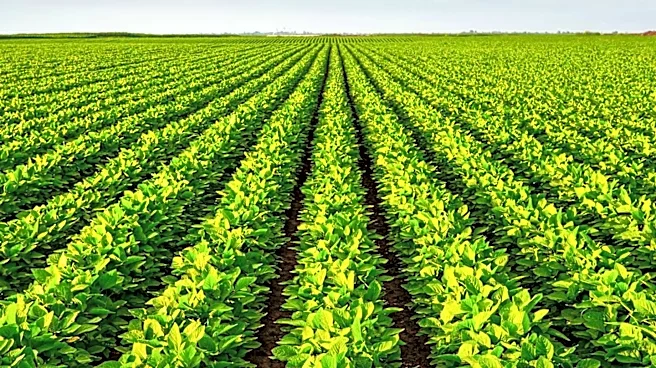
In Minnesota, corn and soybean crops are showing robust development, with 75% of both crops rated in good to excellent condition. This progress is ahead of the typical pace, as indicated by the USDA's latest weekly crop update. Corn is 5% dented, surpassing
the five-year average of 2%, and 75% of soybeans have set pods, significantly ahead of the usual 55%. Ryan Mackenthun, a corn and soybean grower in Southwest Minnesota, noted a considerable reduction in disease pressure compared to the previous year. While some instances of tar spot have been observed, it is not widespread, and pest issues are generally low. This favorable condition suggests a promising outlook for the state's agricultural sector, with crops developing efficiently and facing fewer challenges from diseases and pests.
Why It's Important?
The strong condition of Minnesota's corn and soybean crops is crucial for the U.S. agricultural economy, as Minnesota is a significant producer of these commodities. High crop ratings and accelerated development can lead to increased yields, which in turn can stabilize or lower commodity prices, benefiting consumers and food industries nationwide. For farmers, reduced disease and pest pressure translate to lower input costs for treatments and potentially higher profits. This positive agricultural outlook in Minnesota can also influence national agricultural policies and trade, as a healthy domestic supply reduces reliance on imports and strengthens the U.S. position in global markets. The early development and good health of these crops contribute to overall food security and economic stability within the agricultural sector.
What's Next?
As the growing season progresses, agricultural experts and farmers will continue to monitor the development of corn and soybean crops in Minnesota. The focus will be on maintaining the current healthy conditions and mitigating any potential late-season challenges, such as unexpected weather changes or the emergence of new pest or disease threats. The USDA will release further updates on crop conditions, which will provide more insights into the final yield expectations. Farmers will also be preparing for harvest, with the early development suggesting a potentially earlier start to harvesting activities. The performance of these crops will be a key factor in determining regional and national agricultural economic forecasts for the coming year.
Beyond the Headlines
The resilience of Minnesota's corn and soybean crops, despite the occasional presence of tar spot, highlights the ongoing advancements in agricultural practices and hybrid development. The ability to maintain high crop ratings and accelerated development in the face of potential threats underscores the importance of continuous research into disease-resistant varieties and effective pest management strategies. This situation also reflects the broader trend of adapting to changing environmental conditions and disease patterns in agriculture. The success in Minnesota could serve as a model for other regions, emphasizing the value of proactive monitoring and integrated pest and disease management approaches to ensure sustainable and productive agricultural systems across the U.S.