




What's Happening?
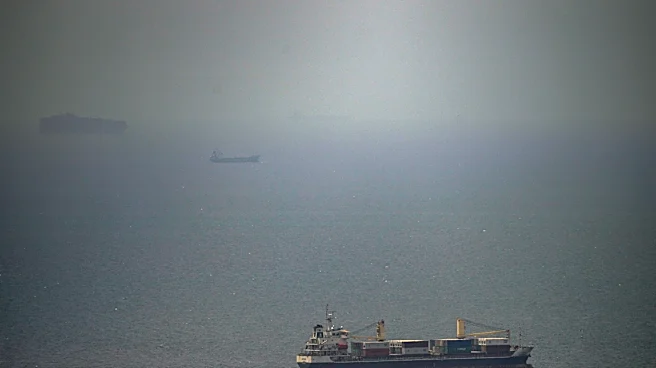
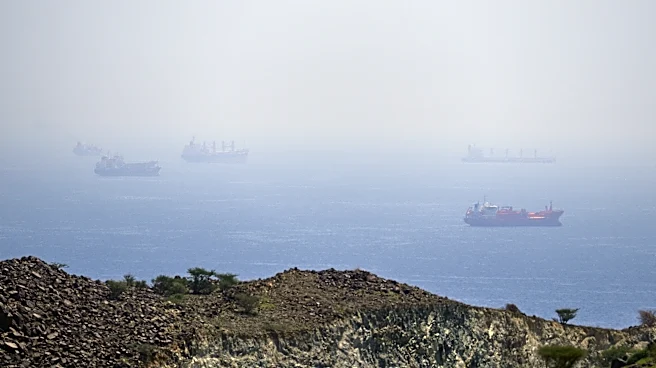
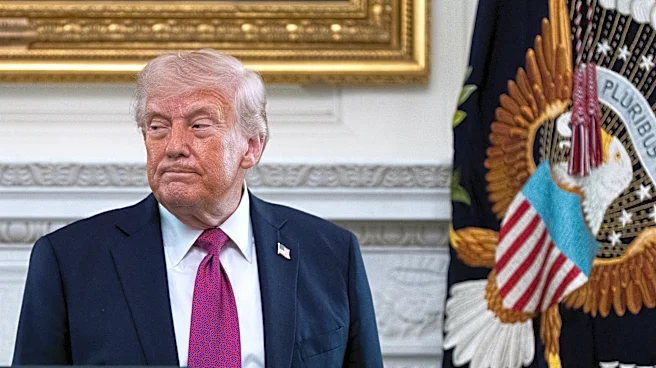
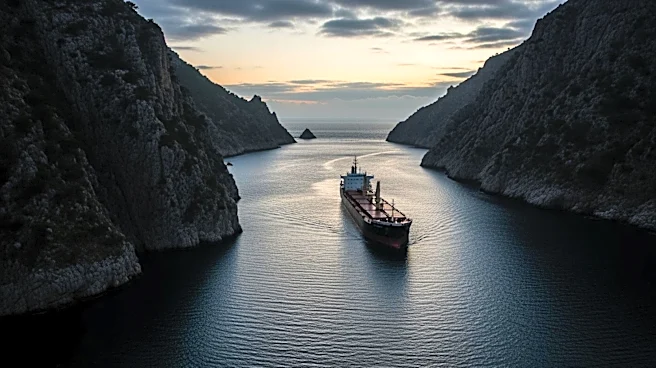
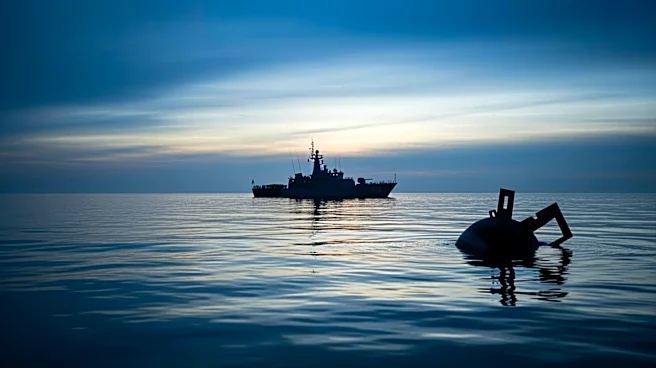
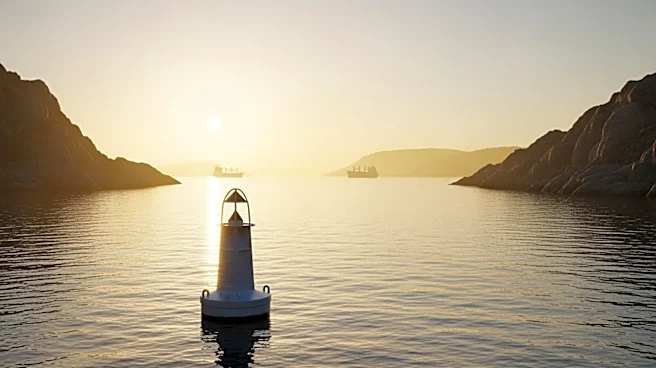
President Trump has directed the US Navy to 'shoot and kill' any boats found laying sea mines in the Strait of Hormuz, a strategic waterway crucial for global oil transport. This order comes amid heightened tensions between the United States and Iran,
following Iran's recent attacks on three ships in the strait, seizing two of them. The US military has also seized another tanker, the Majestic X, associated with smuggling Iranian oil, as part of its global maritime enforcement efforts to disrupt illicit networks supporting Iran. The US blockade of Iranian ports remains in place, effectively choking off nearly all exports through the strait, where 20% of the world’s traded oil passes in peacetime. The conflict has already led to a significant increase in global oil prices, with Brent crude surpassing $100 per barrel.
Why It's Important?
The escalation in the Strait of Hormuz has significant implications for global energy markets and geopolitical stability. The strait is a critical chokepoint for oil transportation, and disruptions here can lead to substantial increases in oil prices, affecting economies worldwide. The US blockade and Iran's retaliatory actions have already caused a spike in energy costs, impacting consumers and businesses, particularly in Europe, which is facing daily costs of around €500 million due to the disruption. The situation also underscores the fragile nature of international maritime security and the potential for further conflict in the region, which could have broader implications for global trade and diplomatic relations.
What's Next?
The ongoing standoff between the US and Iran is likely to continue unless a diplomatic resolution is reached. Iran has demanded the lifting of the US blockade for ceasefire talks to resume, but President Trump has insisted that the blockade will remain until Iran ceases its restrictions on maritime passage. The potential for further escalation remains high, with both sides showing little willingness to compromise. The international community, particularly countries reliant on oil imports through the strait, may increase pressure on both nations to find a peaceful resolution to avoid further economic and geopolitical fallout.