
What's Happening?
In 2023, the Texas Legislature unanimously passed a law increasing auto insurance costs by $1 to combat catalytic converter theft. However, an analysis by The Texas Tribune reveals that a state agency,
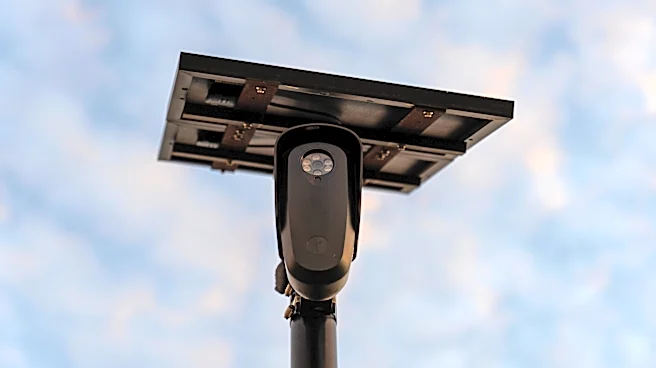
the Motor Vehicle Crime Prevention Authority, has allocated at least $30 million from this fee to expand the state’s Flock surveillance network. This funding has led to the installation of at least 3,200 Flock cameras across Texas, from El Paso to the Louisiana border. The agency has issued over 95 grants to law enforcement for approximately 2,000 cameras, with an additional $15.9 million supporting the Texas Department of Public Safety (DPS) in adding nearly 1,200 more. The authority's chair, Miguel Rodriguez, expressed a desire to cover the entire state with cameras. Following inquiries from The Texas Tribune, Governor Greg Abbott's office announced a pause on all state funding for local grants intended for Flock cameras, stating that such funds cannot be used for these devices.
Why It's Important?
This development highlights a significant expansion of surveillance infrastructure in Texas, funded by a fee initially intended for a different purpose. The use of auto insurance fees to finance a widespread network of AI-powered license plate readers raises concerns about privacy and legislative intent. Lawmakers who voted for the original bill, such as State Sen. Carol Alvarado and Rep. Jeff Leach, stated that surveillance cameras were not discussed during its consideration, expressing surprise at how the funds were utilized. The proliferation of Flock cameras, which create a 'vehicle fingerprint' accessible by law enforcement nationwide without a warrant, has sparked backlash from privacy advocates and some legislators who argue it infringes upon Fourth Amendment rights. The governor's decision to pause funding indicates a recognition of these concerns and could lead to a reevaluation of how such fees are allocated and how surveillance technology is deployed.
What's Next?
Following Governor Abbott's directive to pause state funding for Flock cameras, state agencies will likely clarify that these funds cannot be used for such devices. This could lead to a slowdown in the expansion of the Flock network in Texas, particularly for local law enforcement agencies reliant on state grants. However, DPS still has a separate $28.5 million contract for Flock cameras, indicating that the state's surveillance capabilities may continue to grow through other funding avenues. Legislators like Rep. Mitch Little and Rep. Brian Harrison plan to introduce bills in the next legislative session to ban these devices, citing Fourth Amendment concerns. This suggests a potential legislative battle over the legality and ethical implications of widespread license plate reader surveillance. Public outcry and grassroots anti-surveillance groups are also expected to continue advocating for greater transparency and restrictions on these technologies.
Beyond the Headlines
The controversy surrounding Flock cameras in Texas extends beyond the immediate funding dispute, touching upon fundamental questions of privacy, government oversight, and the evolving nature of law enforcement. The use of AI-powered surveillance tools that collect and store vast amounts of personal movement data creates a 'vehicle fingerprint' for every driver, raising concerns about potential misuse, such as tracking individuals without warrants or for purposes unrelated to the initial crime. Instances of police officers misusing Flock data to stalk ex-partners or co-workers underscore the ethical and legal vulnerabilities of such systems. This situation also highlights a broader trend where technology intended for specific crime prevention can be repurposed for wider surveillance, often without explicit legislative approval or public consent, leading to a gradual erosion of privacy rights in the name of public safety. The debate in Texas could set a precedent for how other states approach funding and regulating advanced surveillance technologies.