






What's Happening?
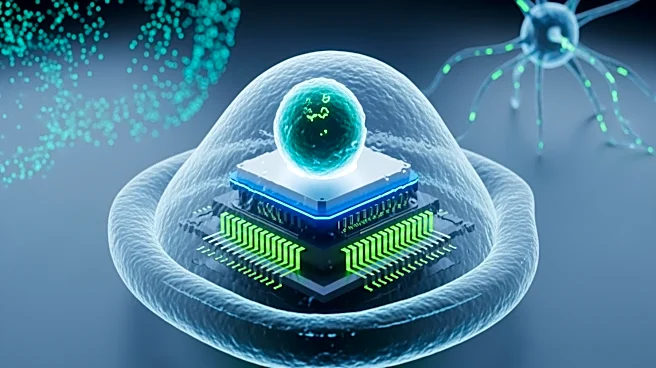
Researchers at the Massachusetts Institute of Technology (MIT) have developed an implantable device that could potentially control diabetes without the need for insulin injections. This device contains insulin-producing cells encapsulated to protect them
from immune rejection, and includes an on-board oxygen generator to maintain cell health. In recent studies, these encapsulated pancreatic islet cells have survived in the body for at least 90 days, producing sufficient insulin to regulate blood sugar levels in mice. The device aims to offer long-term control of type 1 diabetes without the need for immune suppression, which is often debilitating for patients. The research team, led by Professor Daniel Anderson, is exploring the possibility of using this technology to deliver cells that produce other therapeutic proteins.
Why It's Important?
This development is significant as it offers a potential alternative to daily insulin injections for diabetes patients, which can be cumbersome and challenging to manage. The implant could transform diabetes treatment by providing a more sustainable and less invasive method of insulin delivery. Additionally, the technology could pave the way for new treatments for other diseases by enabling the production of therapeutic proteins within the body. This approach could reduce the need for repeated infusions and improve patient quality of life. The success of this device could also lead to advancements in regenerative medicine and cell therapy, offering new hope for patients with chronic conditions.
What's Next?
The researchers plan to extend the lifespan of the device to last up to two years or longer in the body. They are also investigating the use of stem cell-derived islet cells, which could provide an indefinite supply for patients. Further studies will focus on optimizing the device's performance and exploring its application in producing other therapeutic proteins. The team aims to refine the technology to enhance its effectiveness and durability, potentially leading to clinical trials and eventual commercialization.