







What's Happening?
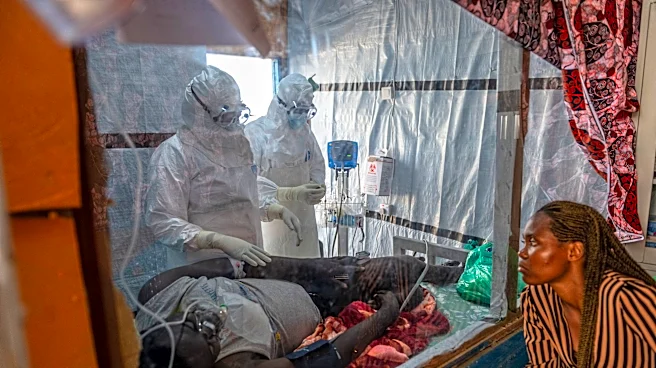
The Bundibugyo virus, a strain of Ebola, is currently causing an outbreak in the Democratic Republic of the Congo, with over 1,250 cases and at least 362 deaths reported. This virus is a relative of the Zaire Ebola virus, known for its deadly outbreaks
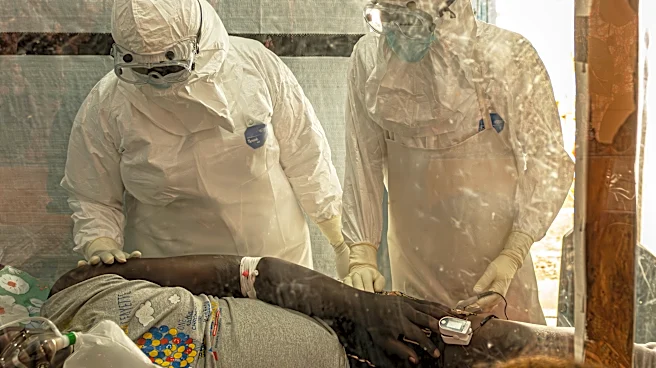
in Africa. The current focus is on controlling the outbreak through patient isolation and contact tracing, as there is no established vaccine. Understanding the wildlife origins of Ebola is crucial for preventing future outbreaks. While fruit bats are often suspected as reservoirs, definitive proof is lacking, and other mammals like gorillas and chimpanzees have been linked to initial human cases.
Why It's Important?
The ongoing Ebola outbreak highlights the critical need for understanding the virus's transmission patterns and wildlife origins. This knowledge is essential for developing strategies to prevent future epidemics. The lack of a vaccine underscores the importance of research and preparedness in managing such outbreaks. The situation also emphasizes the interconnectedness of human, animal, and environmental health, advocating for a 'one health' approach. This approach could lead to better surveillance and preventive measures, reducing the risk of large-scale outbreaks and their devastating impacts on communities.
What's Next?
Efforts to control the current outbreak will continue, with a focus on isolating patients and tracing contacts. In the long term, research into the wildlife origins of Ebola will be crucial. This includes studying potential reservoir hosts and understanding how the virus spills over to humans. International collaboration and funding will be necessary to support these research efforts and develop effective prevention strategies. The outbreak may also prompt a reevaluation of health policies and resource allocation to better prepare for future epidemics.