




What's Happening?
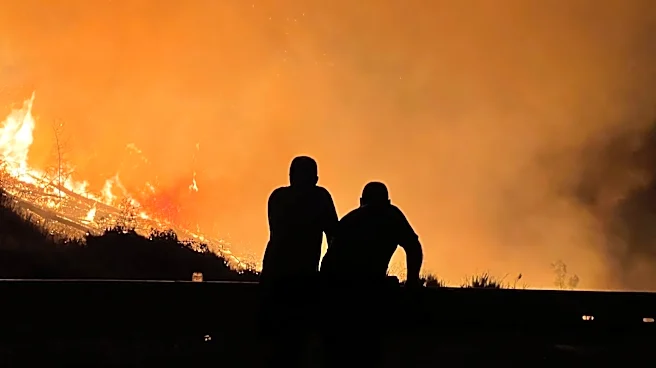
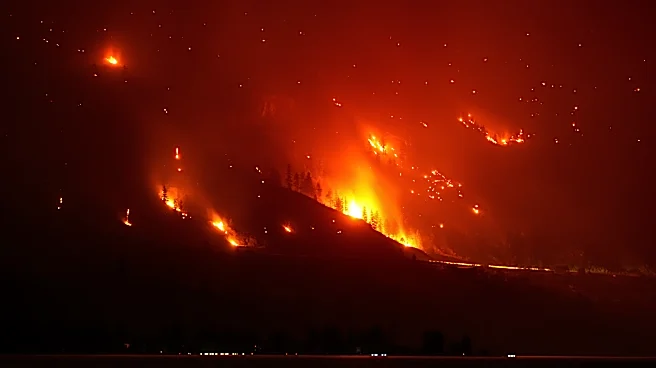
Firefighters across the United States are battling nearly 200 wildfires, with new blazes emerging in several states. The National Interagency Fire Center reports that 183 wildfires are currently burning, with eight large new ones. The fires are affecting
states including Oregon, Washington, Montana, Idaho, Colorado, California, Minnesota, New Mexico, and Nevada. In Oregon, the Wrights Spring Fire has burned over 30,000 acres and resulted in the death of a first responder. In Utah, the Rocky Canyon fire has grown significantly, prompting evacuation orders. The intense fire season is attributed to an abnormally dry and warm winter, exacerbating conditions for wildfires.
Why It's Important?
The widespread wildfires pose significant threats to communities, ecosystems, and infrastructure across the western United States. The fires have led to large-scale evacuations, property damage, and loss of life, highlighting the urgent need for effective wildfire management and response strategies. The situation underscores the broader impacts of climate change, as warmer and drier conditions contribute to more frequent and severe wildfires. The economic costs associated with firefighting efforts and recovery are substantial, affecting local and state budgets. Additionally, the fires have significant environmental impacts, including air quality degradation and habitat destruction.
What's Next?
Efforts to contain the fires are ongoing, with firefighters working tirelessly to manage the blazes. Weather conditions, including potential precipitation and wind shifts, will play a critical role in influencing fire behavior and containment efforts. Authorities continue to issue evacuation orders and advisories to ensure public safety. The situation remains dynamic, with the potential for new fires to emerge as conditions evolve. Continued monitoring and coordination among federal, state, and local agencies are essential to effectively address the challenges posed by the current fire season.