







What's Happening?
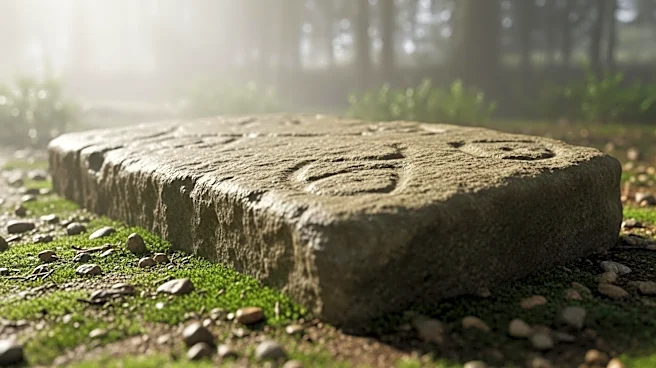
A new study by Curtin University researchers has provided evidence that the Altar Stone at Stonehenge was transported by humans across Britain, rather than by natural glacial movements. The six-ton sandstone megalith is believed to have originated in northeast
Scotland, approximately 700 kilometers from its current location. The study used mineral grain dating and computer models to rule out glaciers as the primary means of transport, suggesting instead that ancient people moved the stone through a combination of overland and water routes.
Why It's Important?
This research sheds light on the remarkable capabilities of Neolithic communities in transporting massive stones over long distances. It highlights the level of organization, planning, and cooperation required for such an undertaking, challenging previous assumptions about prehistoric societies. The findings contribute to the understanding of Stonehenge's construction and the cultural significance of megalithic monuments in ancient Europe. This study also emphasizes the importance of interdisciplinary approaches in archaeology, combining geological analysis with historical research.
What's Next?
Researchers plan to continue investigating the Altar Stone's origins by pinpointing its exact source in Scotland and exploring potential transport routes used by prehistoric people. Further studies may focus on the broader implications of these findings for understanding the social and cultural dynamics of Neolithic societies. This research could also inspire new archaeological methods and technologies to uncover more about ancient human activities and their impact on the landscape.