








What's Happening?
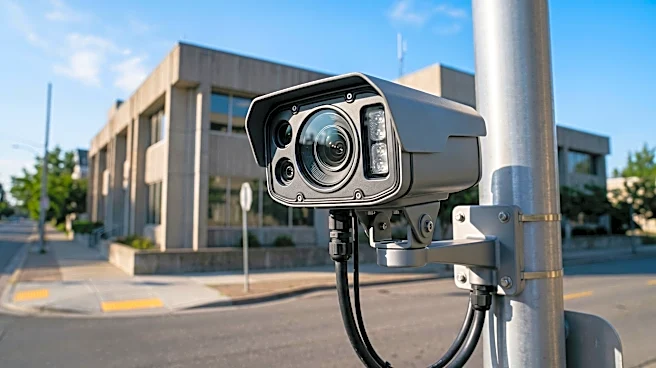
San Francisco Mayor Daniel Lurie announced new policies on September 29, 2026, regarding the city's nearly 500 Flock surveillance cameras, which capture license plate data. While the new rules, effective October 5, require photos to be removed from Flock's
database after 30 days (down from one year), the data will then be transferred to an internal San Francisco Police Department (SFPD) platform for an additional 11 months. Officers can access this data with supervisory approval for active investigations. This retention period is significantly longer than in other Bay Area cities like San Jose, Oakland, and South San Francisco, which typically purge data after 30 days unless marked as evidence. Flock itself recommends a one-week retention period. The mayor's announcement follows controversy over Flock cameras, including reports of illegal searches of San Francisco's data by out-of-state agencies.
Why It's Important?
The new ALPR policy in San Francisco highlights a tension between public safety and privacy concerns. While proponents argue that longer data retention aids law enforcement in solving crimes, critics, including Deputy Public Defender Brian Cox, contend that merely transferring data rather than erasing it 'absolutely misses the forest for the trees.' The extended retention period could increase the risk of data misuse or over-reliance on the technology, as argued by surveillance technology researcher Abigail Hall. The policy also creates a disparity in data retention practices across the Bay Area, potentially making San Francisco's data more accessible to other law enforcement agencies through direct queries to SFPD, even after it's removed from Flock's network. This could have implications for civil liberties and the potential for tracking individuals without sufficient oversight.
What's Next?
The San Francisco Police Department's year-long retention policy is based on a 2023 ordinance from the Board of Supervisors. Police Commissioner Kevin Benedicto has requested that license plate reader policies be reviewed by the commission for more public input, suggesting potential future discussions or amendments. A city supervisor or the mayor would need to introduce a legislative change, and the Board of Supervisors would have to vote it through to alter the current retention period. San Francisco's contract with Flock is up for renewal in February, which could be a point of contention and further debate. The city will also implement monthly internal audits and an annual external audit by the Department of Police Accountability, and officers will be required to cite an incident report number for every search of license plate data.
Beyond the Headlines
The debate over ALPR data retention in San Francisco reflects a broader national discussion about the balance between technological surveillance for security and individual privacy rights. The extended retention period, despite being a reduction from the previous one-year in Flock's database, raises questions about the 'digital footprint' individuals leave and how long that information can be accessed and used by authorities. The involvement of cryptocurrency billionaire Chris Larsen, who funded much of San Francisco's surveillance network and advocated for shorter data retention, underscores the complex interplay of private funding, public policy, and technological implementation in urban security. This situation could set a precedent for how other cities manage surveillance data, particularly as technology advances and public scrutiny over data privacy intensifies.