



What's Happening?
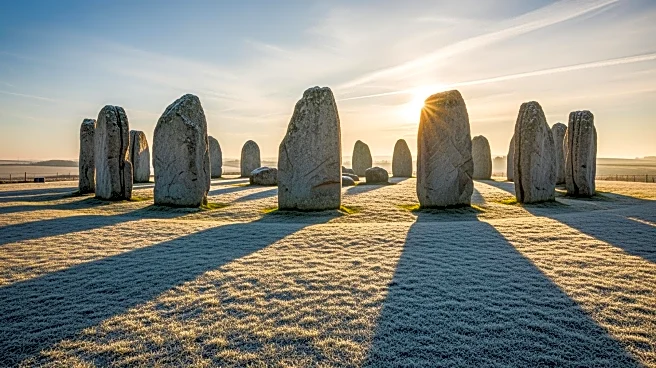
Nearly 8,500 people gathered at Stonehenge to celebrate the winter solstice, marking the shortest day of the year in the Northern Hemisphere. The event, managed by English Heritage, attracted a large crowd, including druids and pagans, who assembled before
dawn to witness the sunrise over the ancient monument. The solstice, derived from the Latin term 'solstitium,' signifies the sun's apparent pause in movement before changing direction. This astronomical event is significant as it marks the beginning of winter in the Northern Hemisphere, while in the Southern Hemisphere, it represents the summer solstice.
Why It's Important?
The winter solstice at Stonehenge is a significant cultural and historical event, drawing attention to ancient traditions and the monument's alignment with the sun. It highlights the enduring human fascination with celestial events and their impact on cultural practices. The large turnout and global livestream viewership underscore the event's international appeal and the importance of preserving such historical sites. This celebration also serves as a reminder of the changing seasons and the natural cycles that have influenced human life for millennia.