






What's Happening?
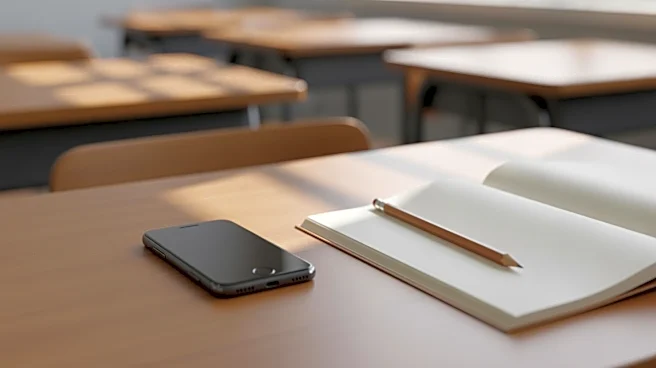
A comprehensive study conducted by researchers from Stanford University, Duke, and the Universities of Pennsylvania and Michigan has examined the effects of cellphone bans in American schools. The study, which analyzed data from approximately 40,000 schools between
2019 and 2026, found that while student wellbeing improved significantly within two years of implementing cellphone bans, academic performance did not show the expected gains. The research indicated that student wellbeing initially declined in the first year of the ban but rebounded by the end of the second year. Despite the positive impact on wellbeing, test scores remained largely unchanged, with results consistently close to zero over the first three years of the bans. The study also noted a significant decrease in phone usage in classrooms, with an 80% reduction observed over three years.
Why It's Important?
The findings of this study are significant as they challenge the assumption that reducing cellphone usage in schools would directly lead to improved academic performance. While the improvement in student wellbeing is a positive outcome, the lack of impact on test scores suggests that other factors may be influencing academic achievement. This has implications for policymakers and educators who advocate for cellphone bans as a means to enhance educational outcomes. The study highlights the complexity of educational environments and the need for multifaceted approaches to improve student performance. Additionally, the reduction in phone usage and the associated increase in student wellbeing could lead to a more conducive learning environment, even if it does not directly translate into higher test scores.
What's Next?
The study's authors suggest that more time may be needed to observe potential improvements in academic performance. As such, educators and policymakers might consider maintaining or expanding cellphone bans while exploring additional strategies to enhance learning outcomes. The ongoing debate about the role of technology in education is likely to continue, with stakeholders examining how best to balance the benefits of digital tools with the need to minimize distractions. Further research could focus on identifying other factors that contribute to academic success and how they interact with cellphone usage in schools.