





What's Happening?
Nevada County Supervisors have approved a significant Good Neighbor Agreement, the Evacuation Safety Corridor and Protection Enhancement (ESCAPE), aimed at improving critical evacuation routes and access for wildland firefighters. This agreement, the largest
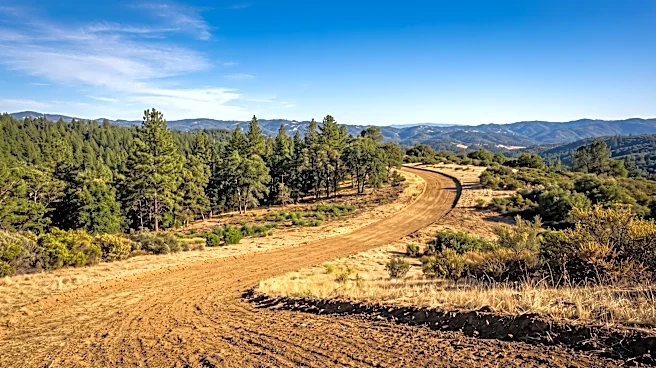
of its kind to date for the county, will fund hazardous fuels reduction across 3,000 acres of the Tahoe National Forest over the next decade. The initiative is backed by over $8 million in state and federal grants, targeting priority locations identified in the 2025 Community Wildfire Protection Plan and the 2024 Evacuation Study. Project areas include Cascade Shores, Lowell Hill Ridge, Chalk Bluff Ridge, Gaston Ridge, Cruzon Grade, Bowman Lake Road, along Highway 20, and near the Town of Washington. The work will focus on building and extending roadside shaded fuel breaks, preserving larger trees while reducing hazardous vegetation to improve firefighter access and the effectiveness of aerial retardant drops. This marks the fourth Good Neighbor Agreement between Nevada County OES and the Tahoe National Forest, expanding wildfire resilience efforts to nearly 4,000 acres of federal land in Nevada County.
Why It's Important?
This partnership is crucial for enhancing public safety and environmental health in Nevada County, a region highly susceptible to wildfires. By reducing hazardous fuels along evacuation routes, the project directly addresses a critical vulnerability for residents during wildfire events, potentially saving lives and property. Improved access for wildland firefighters will also increase their effectiveness in containing and suppressing fires, minimizing their spread and impact. The significant investment of over $8 million in grants underscores the urgency and importance of proactive wildfire mitigation strategies. Furthermore, the collaboration between local government, federal agencies like the U.S. Forest Service, and non-profits such as the National Forest Foundation, along with the involvement of the tribally-led HU\u1e6WEJ fuels crew, sets a precedent for comprehensive and community-inclusive approaches to forest management. This multi-faceted effort not only protects communities but also contributes to the long-term health and resilience of forest ecosystems in the Sierra Nevada region.
What's Next?
The ESCAPE agreement will immediately initiate hazardous fuels reduction across the designated 3,000 acres of the Tahoe National Forest, with work expected to continue over the next decade. The funding, including $7 million from the National Forest Foundation and $1 million from the Sierra Nevada Conservancy, will support both new fuel reduction efforts and the maintenance of previously completed projects. Nevada County OES will partner with the HU\u1e6WEJ stewardship crew for project work under the Sierra Nevada Conservancy grant, integrating Traditional Ecological Knowledge into the land management practices. This collaboration is anticipated to serve as a model for future wildfire resilience initiatives, potentially leading to expanded partnerships and increased pace and scale of fuels reduction and forest restoration work across other vulnerable areas. The ongoing monitoring and evaluation of these efforts will be critical to assess their effectiveness and inform future strategies for wildfire prevention and community protection.
Beyond the Headlines
The ESCAPE agreement highlights a growing recognition of the need for integrated and collaborative approaches to wildfire management, moving beyond traditional suppression tactics to proactive prevention. The involvement of the tribally-led HU\u1e6WEJ fuels crew signifies a deeper shift towards incorporating Traditional Ecological Knowledge (TEK) into modern forest management. This integration acknowledges the historical and cultural understanding of land stewardship, which can offer sustainable and effective methods for maintaining ecosystem health and reducing wildfire risks. The project also underscores the economic implications of wildfires, as proactive investments in fuel reduction can significantly reduce the costs associated with fire suppression, property damage, and ecological restoration. Furthermore, the emphasis on improving evacuation routes reflects a broader societal concern for community resilience and preparedness in the face of increasing climate-related disasters. This initiative could influence policy development at state and federal levels, promoting similar multi-stakeholder partnerships and the adoption of TEK in natural resource management across the U.S.