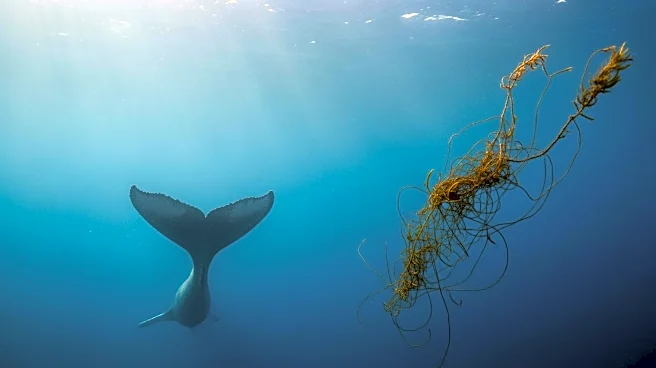

What's Happening?
A United Nations treaty focused on the conservation and sustainable use of marine biological diversity in international waters has officially come into force. This agreement, ratified by over 60 countries,
aims to protect areas of the high seas from overfishing and pollution, marking a significant step in ocean conservation. The treaty is part of the '30 by 30' initiative, which seeks to conserve 30% of the Earth's surface by 2030. It establishes a framework for creating marine protected areas and sharing genetic resources found in international waters.
Why It's Important?
The treaty represents a major advancement in global efforts to protect marine ecosystems, which are crucial for regulating climate and supporting biodiversity. By limiting fishing and pollution in international waters, the treaty could help marine life build resilience against rising ocean temperatures and other climate change impacts. This initiative could also benefit global fisheries by providing safe havens for fish populations to recover, potentially boosting fish stocks in adjacent areas. The treaty's success depends on widespread ratification and effective enforcement by participating nations.
What's Next?
The next steps involve establishing specific protected areas under the treaty, which will require international cooperation and agreement on oversight structures. An inaugural conference of the parties is expected in late 2026 to finalize these details. Enforcement will be a challenge, as it relies on member states to monitor and penalize violations. The treaty's effectiveness will also depend on technological advancements in tracking illegal activities and the political will of nations to uphold its provisions.
Beyond the Headlines
The treaty highlights the potential for international collaboration in addressing environmental challenges. It also raises questions about the balance between conservation and economic interests, as some countries may resist restrictions on fishing in lucrative areas. The treaty's implementation could set a precedent for future agreements on global environmental issues, demonstrating the importance of collective action in preserving natural resources for future generations.