





What's Happening?
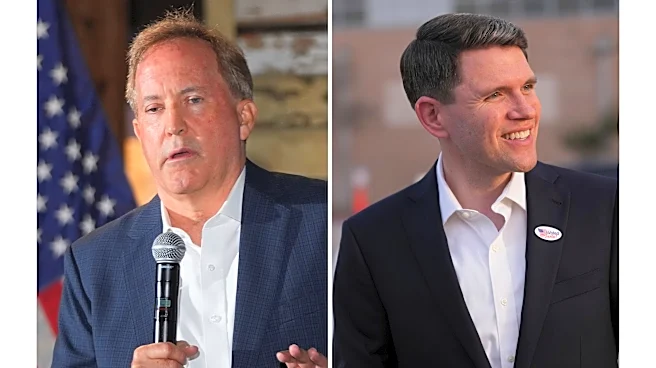
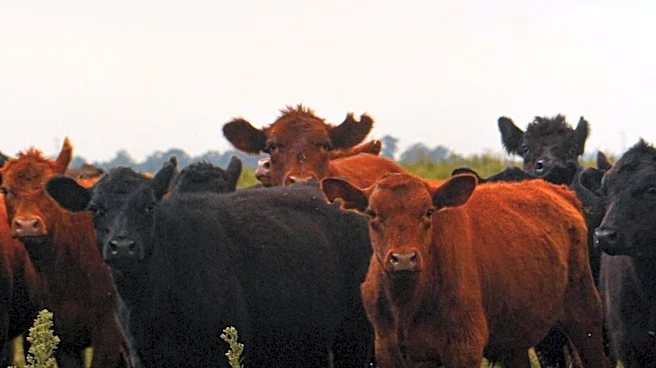
During a debate at the South Dakota State Fair, Republican Governor Larry Rhoden and Democratic challenger Dan Ahlers both expressed criticism regarding President Trump's decision to import more foreign beef. Governor Rhoden, despite having been endorsed
by President Trump, stated his disagreement with the president's logic on the matter, calling the administration's defense 'weak.' He indicated plans to urge U.S. Secretary of Agriculture Brooke Rollins to establish an advisory committee to provide President Trump with more comprehensive information before making such decisions, characterizing the president as 'kind of an impulsive guy.' Ahlers echoed concerns, highlighting that this was not the first instance of the Trump administration suggesting increased foreign beef imports and emphasized the need for South Dakota to advocate more strongly for its farmers and ranchers. The debate also covered other topics, including economic development spending, Medicaid expansion, and the separation of agriculture and environment departments.
Why It's Important?
The bipartisan criticism from South Dakota's gubernatorial candidates regarding President Trump's beef import policy underscores the significant impact of federal agricultural decisions on local economies and political landscapes. For South Dakota, a state with a strong agricultural sector, policies affecting beef imports directly influence the livelihoods of cattle ranchers and the broader agricultural industry. Governor Rhoden's intention to press for an advisory committee suggests a desire to ensure that federal decisions are informed by a wider range of perspectives, potentially mitigating negative consequences for domestic producers. The unified stance from both a Republican incumbent and a Democratic challenger highlights a shared concern for the state's agricultural interests, indicating that this issue transcends typical partisan divides and could be a key factor in the upcoming general election. The debate also revealed differing approaches to economic development, healthcare policy, and environmental governance, all of which have substantial implications for the state's residents and its economic future.
What's Next?
Governor Rhoden plans to engage with U.S. Secretary of Agriculture Brooke Rollins to advocate for the creation of an advisory committee. This committee would aim to provide President Trump with more thorough information before future decisions on agricultural imports are made. The general election between Governor Rhoden and Dan Ahlers is scheduled for November 3, with advance voting commencing on September 18 and the voter registration deadline set for October 19. The candidates will continue to campaign, likely focusing on their differing stances on economic development, Medicaid expansion, and the structure of state government departments. The outcome of the election will determine the future direction of South Dakota's policies on these critical issues, and the candidates' positions on federal agricultural policy may influence voter sentiment, particularly among the state's significant farming and ranching communities.
Beyond the Headlines
The debate over beef imports reveals a deeper tension between national economic policy and the specific interests of regional agricultural sectors. While President Trump's stated aim was to lower consumer prices and allow U.S. ranchers to rebuild herds, the immediate backlash from U.S. cattle ranchers suggests a disconnect between federal policy intentions and on-the-ground realities. This situation highlights the complex interplay between federal trade policies, domestic agricultural production, and the economic well-being of states like South Dakota. The call for an advisory committee by Governor Rhoden points to a broader desire for more localized input in federal decision-making processes, particularly in sectors with significant regional economic impact. This incident could set a precedent for how states, even those aligned with the federal administration, push back on policies perceived as detrimental to their core industries, potentially influencing future federal-state dialogues on economic and trade matters.