








What's Happening?
A new documentary titled 'Operación Cisne Negro' (Operation Black Swan) is shedding light on previously unknown details surrounding the escapes and recapture of Joaquín 'El Chapo' Guzmán. The documentary, directed by Héctor Laso and based on research
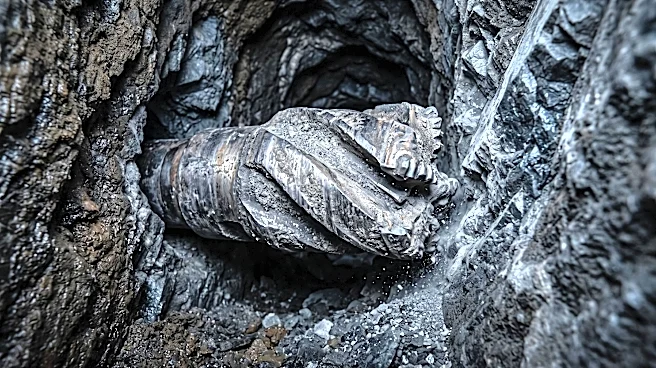
by Samuel Adam, delves into the two hours between Guzmán's 2015 escape from Altiplano prison and the public announcement of his flight. Researchers found that the sounds of drilling for the escape tunnel were audible weeks before his escape, and on the day of the escape, drills were heard inside his cell from 5 PM. The documentary also explores the controversial meeting between Guzmán, actress Kate del Castillo, and actor Sean Penn, revealing that authorities were aware of the meeting and had planned to capture Guzmán then, but the operation did not proceed. Testimonies from federal police officers directly involved in Guzmán's 2016 recapture are also featured, providing fresh perspectives on the events.
Why It's Important?
The revelations from 'Operación Cisne Negro' are significant for understanding the complexities and potential failures within the Mexican state's efforts to combat organized crime. The documentary's focus on the audible drilling before Guzmán's escape and the missed opportunity to capture him during his meeting with Kate del Castillo raises questions about intelligence gathering, operational execution, and potential internal compromises within Mexican security forces. This narrative challenges the official accounts and public perceptions of these high-profile events, suggesting a deeper level of institutional challenges. For the U.S., which has a vested interest in Mexican stability and drug interdiction, these insights could influence future collaborative strategies and intelligence sharing, highlighting areas where Mexican law enforcement capabilities might need strengthening or where corruption could be a persistent issue.
What's Next?
The release of 'Operación Cisne Negro' is likely to reignite public and political discussions in Mexico regarding the effectiveness and integrity of past anti-narcotics operations. It may prompt calls for greater transparency and accountability from government officials concerning the handling of high-profile criminal cases. For the U.S., the documentary's findings could lead to a re-evaluation of intelligence cooperation protocols with Mexico, potentially influencing how information is shared and acted upon in future joint efforts against drug cartels. The documentary's detailed account, drawing from previously unheard testimonies and reserved documents, could also inspire further investigative journalism and academic research into the operational aspects of the drug war in Mexico.
Beyond the Headlines
The documentary's exploration of 'El Chapo' Guzmán's story transcends a mere criminal narrative, positioning him as a significant challenge to Mexican institutions. By highlighting the state's omissions and capabilities, 'Operación Cisne Negro' delves into the broader societal implications of organized crime, including the erosion of public trust and the romanticization of criminal figures in popular culture. The film's emphasis on the human element through the testimonies of those directly involved offers a more nuanced understanding of the events, moving beyond the sensationalism often associated with Guzmán's story. This approach encourages a critical examination of how criminal narratives are constructed and consumed, and how they reflect deeper issues within a nation's governance and social fabric.