




What's Happening?
New research has established a coherent link between climate variability originating in the Atlantic Ocean and year-to-year changes in cutaneous leishmaniasis transmission in North Africa. This vector-borne disease, transmitted by infected female sandflies,
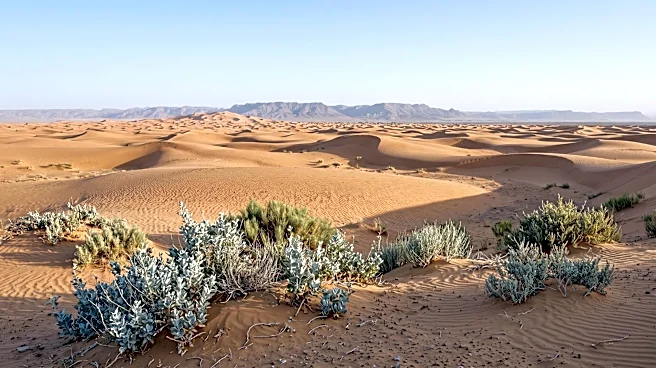
causes approximately 1 million cases globally each year, leading to skin lesions, ulcers, and potential permanent scarring. The study, conducted by Adrià San José Plana and Xavier Rodó, found that slowly varying temperatures in the Atlantic influence large-scale atmospheric circulation and the strength of westerly winds. These winds, in turn, transport moisture towards North Africa, affecting rainfall in leishmaniasis-prone areas. The rainfall then impacts vegetation growth in arid ecosystems, which subsequently influences rodent populations that act as reservoirs for the Leishmania major parasite, as well as the conditions suitable for sandflies to thrive. These ecological changes are directly reflected in the patterns of cutaneous leishmaniasis transmission.
Why It's Important?
This research is significant because it demonstrates that long-range climate predictability is not exclusive to tropical regions, where most seasonal forecasting research has traditionally focused. The discovery of a climate signal originating in the Atlantic that can travel through the atmosphere and local ecosystems to influence disease transmission months later provides a new paradigm for understanding and predicting vector-borne diseases. For public health, this finding lays crucial groundwork for forecasting cutaneous leishmaniasis in countries like Morocco and Tunisia. Such forecasts could provide health authorities with advance warning, enabling them to ramp up surveillance efforts, plan vector control measures, and prepare health services more effectively. This proactive approach could mitigate the physical, psychological, and social harm caused by the disease, including the stigma associated with its lasting scars.
What's Next?
The findings suggest that health authorities in North Africa could potentially utilize these climate-based forecasts to implement timely public health interventions. This could involve pre-positioning medical supplies, organizing public awareness campaigns about preventive measures, and deploying vector control teams to target sandfly populations before outbreaks intensify. Further research will likely explore whether this approach can be transferred to other diseases and regions, depending on how closely their local ecology is tied to rainfall patterns. The study highlights that arid environments, due to their simplified rain-generating processes, may be particularly effective locations for detecting such long-range climate signals. The integration of climate data into disease surveillance and response systems is a critical next step for enhancing global health security.
Beyond the Headlines
The study's implications extend beyond immediate disease forecasting, suggesting a deeper understanding of the intricate connections between global climate patterns and localized health outcomes. It underscores the concept that environmental factors, even those originating thousands of miles away, can have profound and measurable impacts on human health. This research also highlights the importance of interdisciplinary collaboration, combining climate science, infectious disease modeling, and public health. Ethically, the ability to predict outbreaks places a greater responsibility on health systems to act on these warnings, ensuring equitable access to preventive measures and treatment. Culturally, understanding these links can foster greater community engagement in environmental stewardship, recognizing that local ecological health is intertwined with global climate dynamics and human well-being.