
What's Happening?
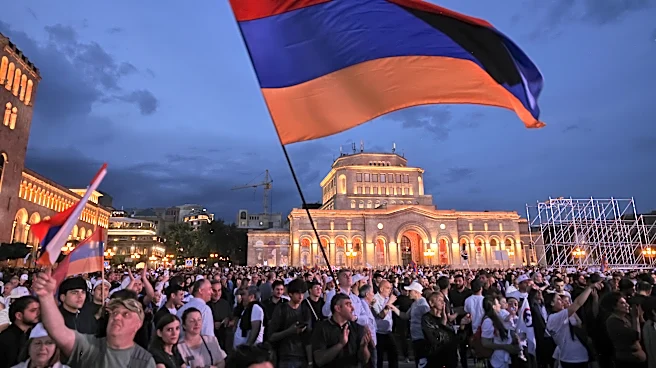
Armenia is preparing for a pivotal parliamentary election that could redefine its geopolitical alliances. Prime Minister Nikol Pashinyan is seeking to strengthen ties with the European Union and the United
States, moving away from Armenia's traditional alignment with Russia. This shift comes after dissatisfaction with Russia's role in the Nagorno-Karabakh conflict, where Russian peacekeepers were accused of failing to prevent Azerbaijan's takeover of the region. Pashinyan's Civil Contract party is favored to retain control, but faces opposition from pro-Russia parties. The election is seen as a referendum on Armenia's future international orientation, with potential economic repercussions from Russia if Armenia pivots towards the West.
Why It's Important?
The outcome of Armenia's election holds significant implications for regional stability and international relations. A shift towards the EU and the U.S. could alter the balance of power in the Caucasus, affecting trade and security dynamics. Russia has warned of economic consequences, including potential disruptions to Armenian exports and energy supplies. The election also highlights the broader geopolitical struggle between Western and Russian influences in former Soviet states. A successful pivot by Armenia could encourage other nations in the region to reconsider their alliances, potentially leading to increased tensions with Russia.
What's Next?
If Pashinyan's party wins, Armenia is likely to continue its Western integration efforts, including finalizing agreements with Azerbaijan and pursuing EU membership. This could lead to further economic and political pressure from Russia, which may impose additional trade restrictions or leverage its control over Armenian infrastructure. The international community, particularly the EU and the U.S., may increase support for Armenia to counterbalance Russian influence. The election results will also be closely watched by other countries in the region, potentially influencing their foreign policy decisions.
Beyond the Headlines
The election underscores the complex interplay of national sovereignty and external influence in Armenia. It raises questions about the effectiveness of Russian security guarantees and the potential for Western alliances to provide alternative security and economic benefits. The situation also highlights the role of disinformation and cyber tactics in modern elections, with reports of Russian interference aiming to sway public opinion and maintain geopolitical leverage. The outcome could set a precedent for how small nations navigate the pressures of competing global powers.