





What's Happening?
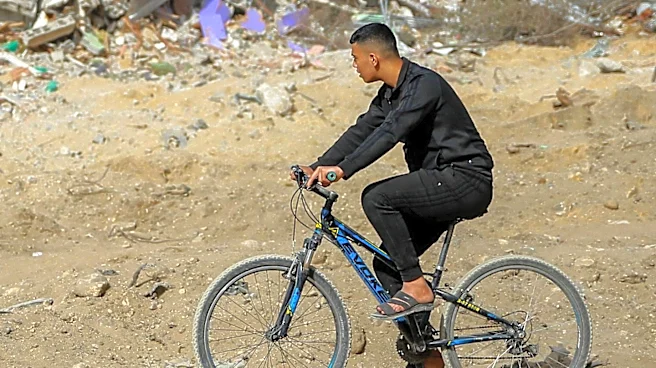
An initiative led by Professor Eugenio Mazzarella from a university in Naples has proposed awarding the Nobel Peace Prize to the children of Gaza. This proposal, published in the Italian newspaper Avvenire, aims to highlight the plight of minors in Gaza,
where 300 children have reportedly died since the latest ceasefire. The initiative has garnered support from various Italian citizens, clergy, and political figures, including Democratic Party leader Elly Schlein, who emphasized the dire humanitarian situation in Gaza. However, the proposal has faced criticism from Jewish leaders in Italy, who argue that it overlooks the suffering of Israeli children and other victims of war. Walker Meghnagi, president of the Jewish community of Milan, described the initiative as 'moral apartheid,' while Daniel Nahum, a Jewish member of Milan's City Council, suggested a more inclusive approach to recognizing child victims of war globally.
Why It's Important?
The proposal has sparked a significant debate about the recognition of suffering in conflict zones and the role of international awards in highlighting humanitarian issues. Supporters argue that the initiative could draw global attention to the humanitarian crisis in Gaza, potentially influencing international policy and aid. Critics, however, warn that focusing solely on Gaza's children could exacerbate tensions and overlook the broader context of conflict, including the suffering of Israeli children and others affected by war. This controversy highlights the complexities of international advocacy and the challenges of addressing humanitarian issues without deepening existing divides.
What's Next?
The proposal is likely to continue generating debate within Italy and internationally, as stakeholders from various communities express their views. The discussion may prompt broader conversations about how international awards like the Nobel Peace Prize can be used to address humanitarian crises. Additionally, the initiative could influence future advocacy efforts and policy discussions related to the Israeli-Palestinian conflict and other global humanitarian issues.
Beyond the Headlines
The controversy surrounding the proposal underscores the ethical and moral challenges in recognizing victims of conflict. It raises questions about the criteria for international recognition and the potential for such initiatives to either bridge or widen divides between communities. The debate also reflects broader tensions in international discourse on the Israeli-Palestinian conflict, highlighting the need for nuanced approaches that consider the perspectives and suffering of all affected parties.