







What's Happening?
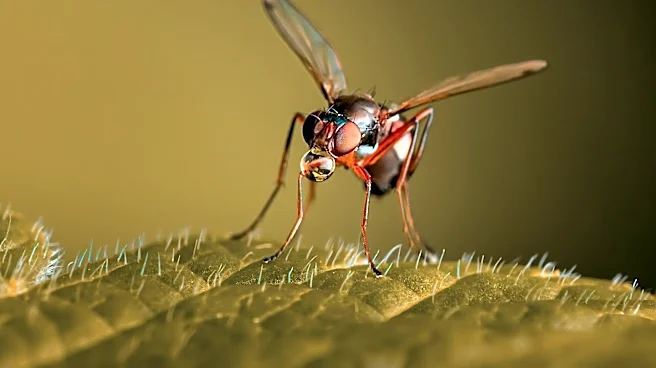
The New World screwworm, a parasitic fly eradicated from the U.S. nearly 60 years ago, has re-emerged, with cases reported in Texas and New Mexico. The parasite lays eggs in open wounds, and the larvae feed on living tissue. The USDA has launched a $25
million initiative to curb its spread, including releasing sterile male flies to prevent reproduction. While the risk to North Carolinians is low, experts advise vigilance, especially for those traveling to affected areas. The USDA's protocols aim to prevent the parasite from spreading further.
Why It's Important?
The reappearance of the New World screwworm poses a significant threat to livestock and wildlife in the southwestern U.S., with potential economic impacts on agriculture and animal husbandry. The federal response, including funding for sterile fly production, highlights the seriousness of the threat. While human infections are rare, the parasite's presence underscores the need for robust biosecurity measures and public awareness to prevent further spread. The situation also raises questions about cross-border pest control and the effectiveness of current eradication strategies.