



What's Happening?
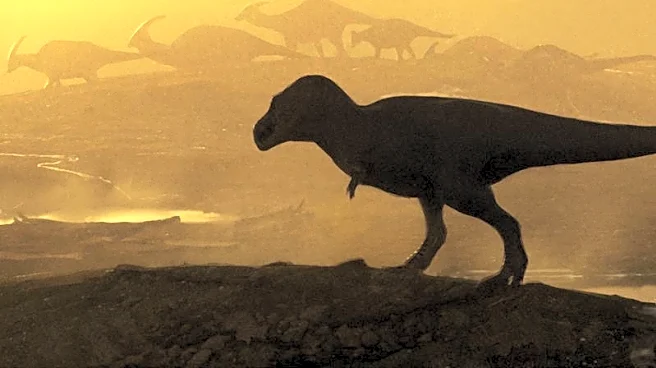
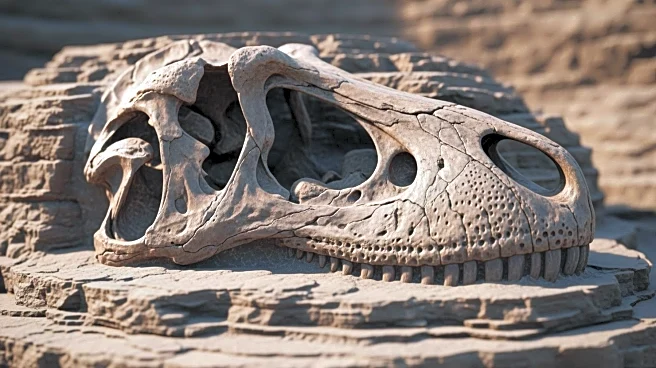
A recent analysis of a shinbone from the oldest known giant tyrannosaur in North America suggests that the Tyrannosaurus rex may have had a significantly large ancestor. The fossil, discovered at the Kirtland Foundation in New Mexico, dates back approximately
74 million years to the Late Campanian period. This discovery predates most known T. rex fossils, which are typically from the late Maastrichtian period. Paleontologist Nicholas Longrich and his team from the University of Bath have identified the fossil as a close relative of the T. rex, based on its physical characteristics. The shinbone's dimensions suggest the dinosaur weighed around 4,700 kilograms, comparable to a large male African bush elephant. This finding supports the hypothesis that large tyrannosaurids appeared earlier than previously believed, potentially originating from the southern end of a landmass known as Laramidia, which is now part of North America.
Why It's Important?
This discovery is significant as it provides new insights into the evolutionary history of the Tyrannosaurus rex, one of the most iconic dinosaurs. The identification of a large ancestor in North America challenges previous theories that T. rex originated in Asia. It also suggests that large tyrannosaurids evolved earlier than previously thought, which could lead to a reevaluation of the dinosaur's evolutionary timeline. This finding has implications for paleontologists studying the distribution and evolution of dinosaurs, as it highlights the importance of the fossil record in understanding prehistoric life. Additionally, it may prompt further exploration and excavation in the region to uncover more evidence of early tyrannosaurids.
What's Next?
Further research and excavation are needed to confirm the size and relationships of this newly discovered tyrannosaur. Paleontologists aim to find additional remains, such as isolated teeth or bones, to better understand the dinosaur's place in the evolutionary tree. This could involve more detailed studies of the Kirtland Foundation's fossil layers and potentially discovering more specimens that could provide a clearer picture of the tyrannosaur's lineage. The findings may also encourage similar studies in other regions to explore the origins and evolution of large theropods.