
What's Happening?
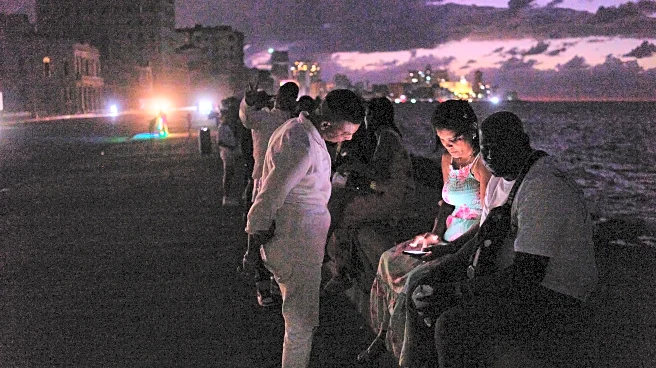
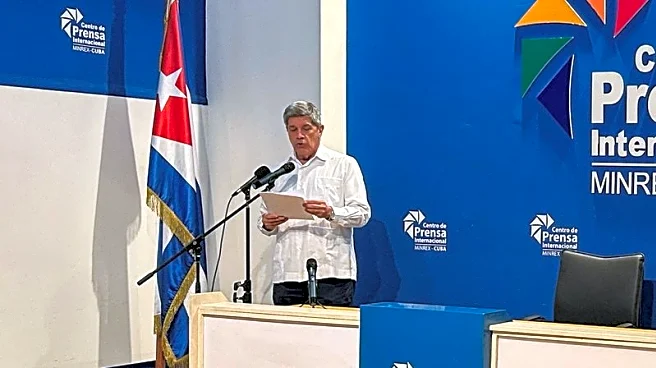
Cuba experienced a nationwide power outage on Saturday, marking the third blackout in March. The Cuban Electric Union, under the Ministry of Energy and Mines, reported the blackout was due to an unexpected failure at the Nuevitas thermoelectric plant
in Camagüey province. This failure triggered a cascading effect, leading to a total blackout. The government has been struggling with an aging infrastructure and a U.S.-imposed oil blockade, which has exacerbated the situation. The Ministry activated 'micro-islands' of generating units to supply power to essential services like hospitals and water systems. Power outages have become frequent over the past two years, often lasting up to 12 hours due to fuel shortages. The Cuban government attributes these outages partly to the U.S. energy blockade, which was intensified by President Trump's warning of tariffs on countries supplying oil to Cuba.
Why It's Important?
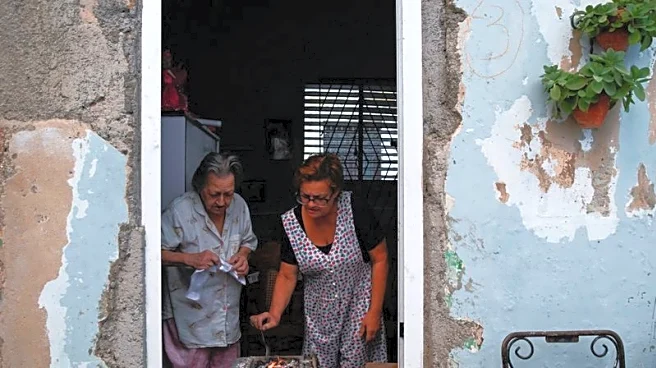
The recurring power outages in Cuba highlight the severe impact of geopolitical tensions and infrastructure decay on the country's energy stability. The U.S. energy blockade, coupled with the removal of Venezuela's leader, has significantly reduced Cuba's oil supply, leaving the nation to produce only 40% of its fuel needs. These blackouts disrupt daily life, affecting work hours, food preservation, and healthcare services, with hospitals sometimes forced to cancel surgeries. The situation underscores the broader implications of international sanctions and political strategies on a nation's internal affairs, potentially leading to increased social unrest and economic instability.
What's Next?
Cuban authorities are working to restore power, but the ongoing infrastructure issues and fuel shortages suggest that further outages are likely. The Cuban government may seek alternative energy sources or negotiate with international partners to alleviate the blockade's effects. Meanwhile, the U.S. administration's demands for political and economic reforms in Cuba remain a contentious point, potentially influencing future diplomatic relations. The situation may prompt international discussions on energy security and the humanitarian impact of economic sanctions.
Beyond the Headlines
The Cuban power crisis raises ethical questions about the use of economic sanctions as a tool for political leverage. The humanitarian impact on the Cuban population, including access to essential services, highlights the need for a balanced approach that considers both political objectives and human rights. The crisis also reflects the broader challenges faced by countries with aging infrastructure and limited access to global energy markets, emphasizing the importance of sustainable energy solutions and international cooperation.