







What's Happening?
A public dispute has erupted between Piers Morgan and Ben Shapiro, escalating from a disagreement over criticism of Israel's conduct in Gaza into a personal exchange of insults and accusations. The feud, which has played out on social media platforms
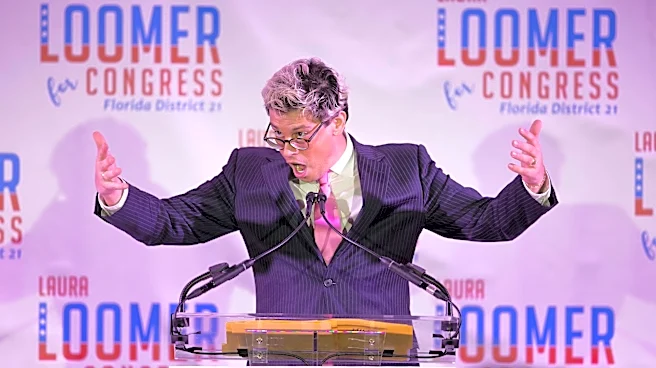
like X, centers on Shapiro's contention that Morgan provides a platform to individuals who express extreme views on Israel and the United States, thereby legitimizing their perspectives. Shapiro has labeled Morgan the 'Jerry Springer of political television,' accusing him of seeking clicks by featuring controversial guests. Morgan, in turn, has accused Shapiro of being an 'amoral, intellectually dishonest click-whore' and suggested Shapiro's show is 'floundering.' This conflict highlights a growing fracture within the pro-Israel right, with allies like Megyn Kelly siding with Morgan, despite her past closeness to Shapiro. The dispute intensified following Morgan's interview with Milo Yiannopoulos, which Shapiro criticized, leading to further public exchanges and Morgan announcing Shapiro was 'banned' from his show, a claim Shapiro countered by stating he had already declined to appear months prior.
Why It's Important?
This public feud between two prominent media figures is significant because it exposes deeper tensions within conservative media regarding the platforming of controversial opinions, particularly concerning U.S. foreign policy and the Israeli-Palestinian conflict. Shapiro's argument that platforming has consequences, and that giving a large audience to extreme views can legitimize them, touches on a critical debate about media responsibility and the impact of content on public discourse. Conversely, Morgan's defense that he pushes back on guests and that criticism of the Israeli government should not be suppressed, reflects concerns about censorship and the free exchange of ideas. The involvement of other influential figures like Megyn Kelly and Tucker Carlson further underscores the ideological divisions and the potential for long-standing alliances to fracture over these issues. The dispute also raises questions about the motivations behind media content, with Shapiro suggesting some commentators 'grift for clicks and cash,' which could influence the narratives presented to the public and potentially impact political outcomes, as ideas discussed in media can eventually influence policy and elections.
What's Next?
The immediate future will likely see continued public exchanges between Piers Morgan and Ben Shapiro, as both individuals are known for their outspoken nature and active presence on social media. The ongoing debate about media platforming and the responsibility of hosts to challenge extreme views is expected to persist, potentially influencing how other media outlets approach guest selection and interview formats. This feud could also lead to further realignments within conservative media, as commentators and audiences choose sides, potentially impacting viewership and listenership for various shows and podcasts. The broader implications for political discourse, particularly concerning U.S. foreign policy and the Israeli-Palestinian conflict, remain to be seen. The source suggests that ideas discussed in podcasts can eventually influence ballots, indicating that the arguments made by figures like Shapiro and Morgan could have tangible effects on political campaigns and public opinion, as evidenced by the mention of a Democratic Senate nominee in Michigan advocating for an arms embargo on Israel.
Beyond the Headlines
Beyond the immediate personal attacks, this feud delves into fundamental questions about the ethics of media and the nature of public debate in the digital age. The core of Shapiro's argument—that platforming extreme views has real-world consequences and that the 'I push back' defense is often insufficient—highlights a growing concern about the normalization of radical ideas. This raises ethical dilemmas for media personalities and outlets: where is the line between facilitating open discussion and inadvertently amplifying harmful narratives? The dispute also touches on the commercialization of controversy, with Shapiro suggesting commentators 'grift for clicks and cash,' implying that sensationalism can sometimes overshadow journalistic integrity. This dynamic can lead to a 'race to the bottom' in media, where outrage and extreme takes are prioritized for engagement, potentially eroding trust in media institutions and polarizing public opinion further. The long-term shift could be a re-evaluation of how media figures engage with guests who hold controversial views, and a greater emphasis on the accountability of platforms for the content they disseminate.