






What's Happening?
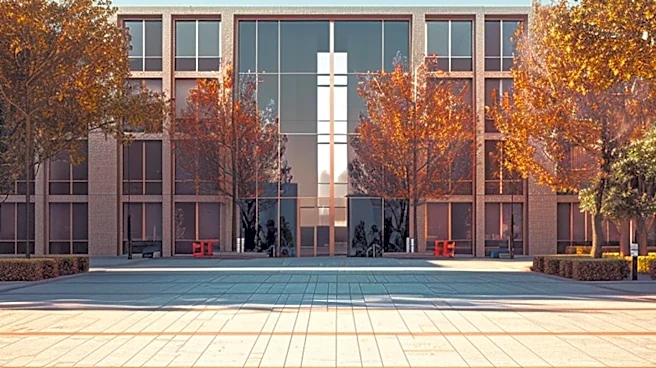
Springfield, Massachusetts, has seen the redevelopment of two historic buildings into income-restricted apartment complexes. Governor Maura Healey, U.S. Representative Richard Neal, and Mayor Domenic Sarno, among other officials, attended the ribbon-cutting
ceremony for the Residences at the Vault and the Merrick Park Apartments. The Residences at the Vault, formerly the Federal Land Bank building at 300-310 State St., was built in 1924 and now offers 60 units. The Merrick Park Apartments, located at 195 State St., was once the Springfield Fire and Marine Insurance Company and now contains 62 units. Both projects by First Resource Companies aim to address the housing shortage, with the Vault already fully occupied and a lottery for Merrick Park Apartments closing on September 8. The total investment for these two redevelopments is $80 million.
Why It's Important?
This initiative is crucial for addressing the significant housing shortage in Massachusetts, which Governor Healey noted as approximately 220,000 homes. The conversion of historic buildings into income-restricted apartments provides much-needed affordable housing options, directly impacting low- and middle-income residents in Springfield. This approach not only increases housing supply but also preserves historical architecture, contributing to urban revitalization and cultural heritage. The involvement of federal, state, and local government officials, along with tax credit programs, highlights a collaborative effort to close funding gaps for such projects. This model could serve as a blueprint for other U.S. cities facing similar housing challenges, demonstrating how public-private partnerships and strategic financial incentives can facilitate sustainable urban development and provide accessible housing.
What's Next?
With the Residences at the Vault fully occupied and the lottery for Merrick Park Apartments closing soon, the immediate next step will be the full occupancy and operation of both complexes. The success of these projects may encourage First Resource Companies and other developers to pursue similar historic redevelopment initiatives in Springfield and other Massachusetts communities. Governor Healey's administration will likely continue to promote legislation like the Affordable Homes Act, which provides tax credits and incentives for housing development, including office-to-residential conversions and accessory dwelling units. The reduction of permitting times from one year to 30 days is expected to further accelerate housing construction. Continued monitoring of the impact on housing costs and availability in Springfield will be essential to assess the long-term effectiveness of these efforts.
Beyond the Headlines
The redevelopment of these historic buildings into affordable housing units carries deeper implications beyond simply increasing housing stock. It represents a commitment to sustainable urban development, blending historical preservation with modern community needs. By repurposing existing structures, the projects reduce urban sprawl and minimize environmental impact compared to new construction. Furthermore, providing income-restricted housing in central locations can foster more diverse and inclusive communities, allowing individuals from various economic backgrounds to live closer to employment, services, and cultural amenities. This approach also challenges the traditional view of historic buildings as static relics, instead transforming them into dynamic, functional spaces that contribute to the social and economic vitality of a city. The emphasis on 'preservation over profit' by First Resource Companies suggests a growing trend towards socially responsible development in the U.S. real estate sector.