






What's Happening?
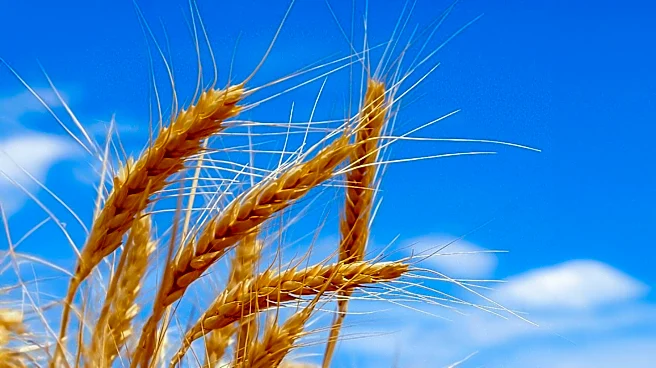
Researchers at Tel Aviv University have identified a genetic mechanism that could significantly improve wheat crop yields and nutritional value. The study, partially led by Dr. Zechariah Haber before his death in Gaza in January 2024, focused on a gene from
wild wheat that influences grain size and nutrient distribution. By reducing the activity of this gene using CRISPR technology, the researchers were able to produce larger and heavier grains with higher levels of protein, iron, and zinc. This discovery could help develop wheat varieties with better yields and nutritional quality, drawing on the genetic diversity of wild wheat, which has been largely lost in modern cultivated varieties.
Why It's Important?
This breakthrough has the potential to address global food security challenges by increasing wheat yields and improving nutritional content. As climate change affects agricultural conditions, the ability to develop wheat varieties that can thrive in diverse environments becomes crucial. The identified gene, which varies across different climates, could help create crops that maintain productivity and quality under changing conditions. This research not only contributes to scientific understanding but also offers practical solutions for enhancing food production and nutrition, benefiting farmers and consumers worldwide.
What's Next?
The next steps involve further research to refine the application of this genetic discovery in commercial wheat breeding. Collaboration with agricultural organizations and industry stakeholders will be essential to translate these findings into viable crop varieties. Additionally, exploring the genetic diversity of other wild plant species could uncover more opportunities for improving agricultural resilience and sustainability. As the global demand for food continues to rise, such innovations will be critical in ensuring food security and adapting to environmental changes.
Beyond the Headlines
The study highlights the importance of preserving genetic diversity in wild plant species, which serve as a valuable resource for modern agriculture. Ethical considerations around the use of gene-editing technologies like CRISPR also come into play, as they offer powerful tools for crop improvement but require careful regulation and public acceptance. This research underscores the potential of integrating traditional knowledge with cutting-edge science to address contemporary challenges in food production.