






What's Happening?
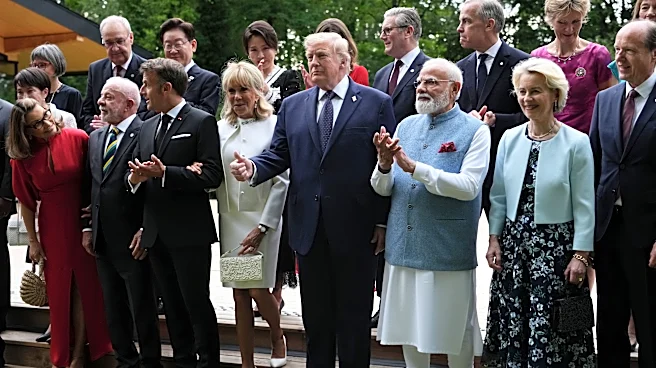
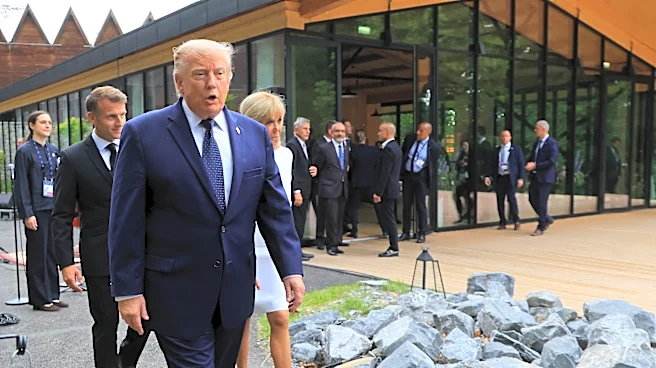
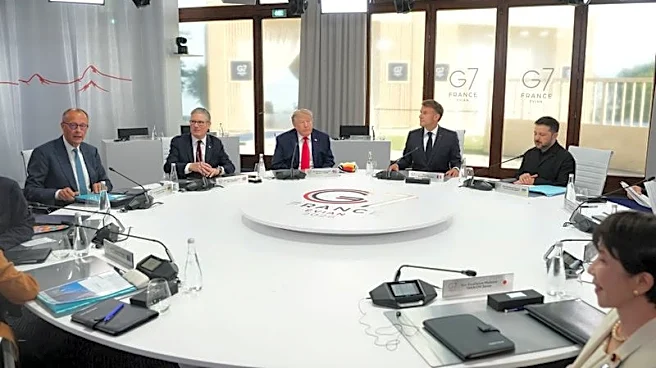
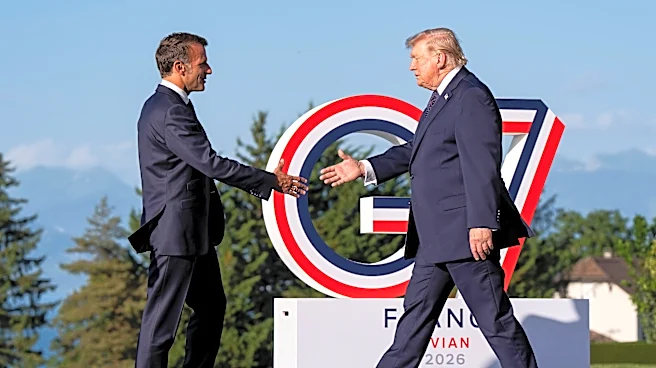
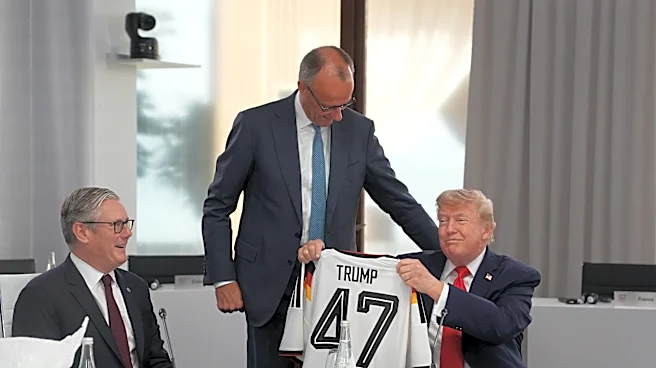
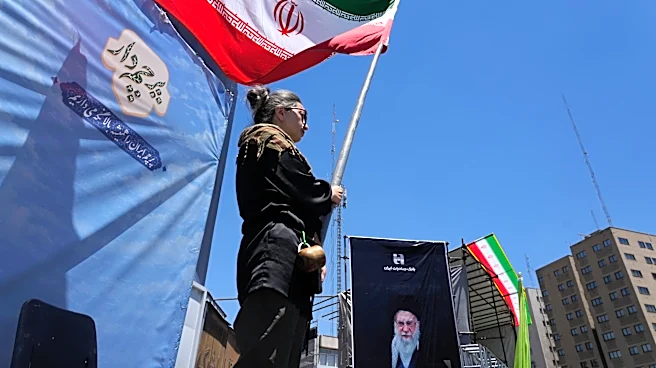
At the Group of Seven (G7) summit in Evian-les-Bains, France, President Trump is working to gain support for a tentative agreement with Iran aimed at opening the Strait of Hormuz and extending a ceasefire. The agreement, which has not been publicly detailed,
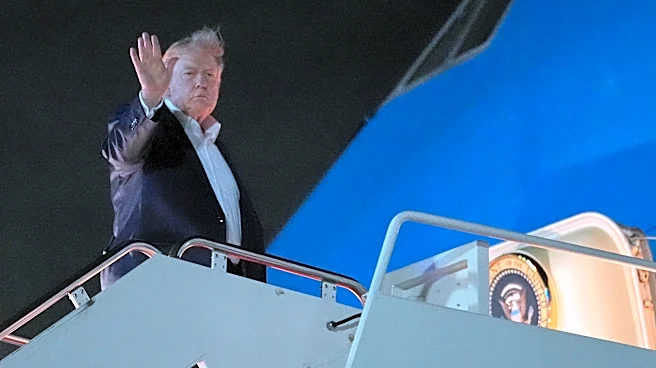
is described by Trump as a 'historic opportunity' to prevent Iran from acquiring nuclear weapons. Despite backing from G7 leaders, the deal faces skepticism due to the lack of specifics and concerns from key ally Israel. The summit also includes discussions on artificial intelligence and economic growth, with Trump planning to return to Washington after a dinner at the Palace of Versailles.
Why It's Important?
The agreement with Iran is significant as it addresses the critical issue of nuclear proliferation and regional stability. The Strait of Hormuz is a vital maritime chokepoint for global oil and gas trade, and its reopening could stabilize energy markets. However, the deal's success depends on its acceptance by U.S. political figures and the international community. Israel's concerns about the terms of the ceasefire highlight the complexities of Middle Eastern geopolitics. The G7's support for the agreement underscores the importance of multilateral cooperation in addressing global security challenges.
What's Next?
The next steps involve formalizing the agreement with a signing ceremony in Switzerland. President Trump must also navigate domestic political challenges to secure support for the deal. Internationally, the focus will be on ensuring compliance with the agreement's terms, particularly regarding Iran's nuclear activities and the reopening of the Strait of Hormuz. The G7's commitment to supporting maritime security in the region will be crucial in facilitating the resumption of trade through the strait.
Beyond the Headlines
The agreement's implications extend beyond immediate geopolitical concerns. It reflects broader themes of international diplomacy and the balance of power in the Middle East. The deal could influence U.S. relations with other regional players, such as India, which has been affected by the conflict's impact on energy supplies. Additionally, the G7's discussions on artificial intelligence and economic growth highlight the interconnectedness of security, technology, and economic policy in shaping global affairs.