



What's Happening?
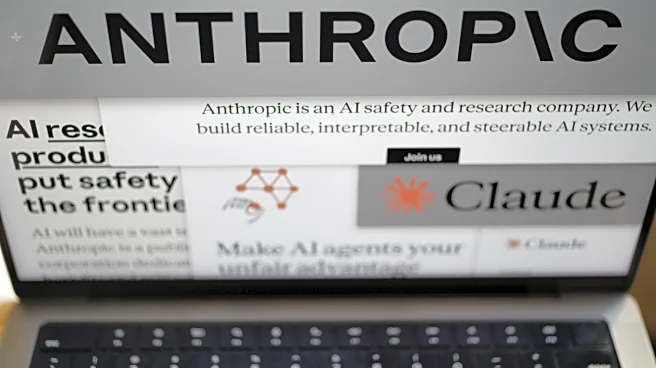
The Trump administration has placed the artificial intelligence company Anthropic on a national security blacklist, effectively barring federal agencies and contractors from using its technology. This decision follows a contentious period of negotiations
between Anthropic and the Pentagon, during which the company resisted demands to allow its AI system, Claude, to be used for military purposes without restrictions. President Trump criticized Anthropic on social media, accusing the company of endangering national security by refusing to comply with the Pentagon's terms. Defense Secretary Pete Hegseth declared Anthropic a supply-chain risk, prohibiting any military-affiliated business from engaging with the company. The move has sparked significant backlash within the tech community, with over 500 employees from companies like Google and OpenAI signing a letter in support of Anthropic's stance against the Pentagon's demands.
Why It's Important?
This development highlights the ongoing tension between the U.S. government and tech companies over the use of AI in military applications. The decision to blacklist Anthropic could have far-reaching implications for the relationship between Silicon Valley and the Defense Department, potentially deterring other tech firms from collaborating on defense projects. The situation underscores the ethical concerns within the tech industry about the use of AI for surveillance and autonomous weapons, which many researchers and engineers oppose. The Trump administration's actions may also influence future policy decisions regarding AI and national security, as well as impact the competitive landscape among AI firms vying for government contracts.
What's Next?
The Pentagon has allowed a six-month transition period for federal agencies to phase out the use of Anthropic's technology. During this time, Anthropic is expected to cooperate with the government to ensure a smooth transition to alternative AI providers. The situation may lead to increased scrutiny of AI companies' involvement in defense projects and could prompt further discussions about the ethical use of AI in military contexts. Additionally, the decision may open opportunities for other AI firms, such as Elon Musk's xAI, which has reportedly agreed to the Pentagon's terms, to fill the void left by Anthropic.
Beyond the Headlines
The blacklisting of Anthropic raises broader questions about the balance between national security and ethical considerations in the deployment of AI technologies. It also highlights the potential for political dynamics to influence technological innovation and collaboration. The incident may prompt tech companies to reevaluate their policies and partnerships with government entities, particularly in areas involving sensitive or controversial applications of AI. Furthermore, the situation could lead to increased advocacy for clearer regulations and guidelines governing the use of AI in national security contexts.