


What's Happening?
The U.S. Supreme Court is currently hearing arguments in the case of Monsanto v. Durnell, a pivotal legal battle that could redefine the responsibilities of pesticide manufacturers regarding public health warnings. The Center for Food Safety (CFS), a prominent
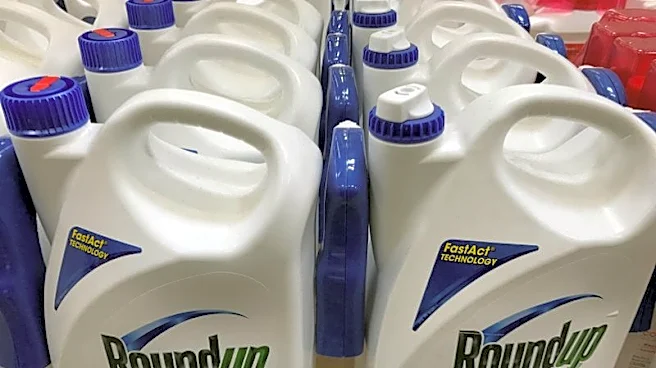
legal nonprofit, is actively involved in the case, advocating for greater transparency and accountability in pesticide labeling. The case centers on glyphosate, the active ingredient in Monsanto's Roundup, which has been widely used across U.S. agriculture. The outcome could significantly affect Americans' rights to be informed about pesticide hazards and their ability to seek legal recourse for health damages. This case follows a 2022 federal court ruling that invalidated the Environmental Protection Agency's (EPA) previous safety assessment of glyphosate, citing inconsistencies with scientific standards.
Why It's Important?
The implications of Monsanto v. Durnell extend beyond glyphosate, potentially setting a precedent for how pesticide health warnings are regulated across the United States. A ruling in favor of Monsanto could undermine state and municipal efforts to enforce stricter health warnings, thereby limiting public access to critical health information. This case also highlights ongoing tensions between federal and state regulatory powers, particularly in the context of public health and safety. The decision could influence future litigation and regulatory policies concerning pesticide use and safety, impacting farmers, consumers, and environmental health advocates.
What's Next?
A decision from the Supreme Court is expected by the end of June. Depending on the outcome, there could be significant shifts in how pesticide regulations are enforced at both state and federal levels. Stakeholders, including environmental groups, agricultural businesses, and public health organizations, are closely monitoring the case. The ruling could prompt legislative action or further legal challenges, particularly if it restricts states' abilities to impose their own health warnings on pesticides.