





What's Happening?
Environmental groups, including the Upper Peninsula Environmental Coalition, the Environmental Law and Policy Center, and the Natural Resources Defense Council, have filed a lawsuit against the U.S. Forest Service. The lawsuit challenges the agency's
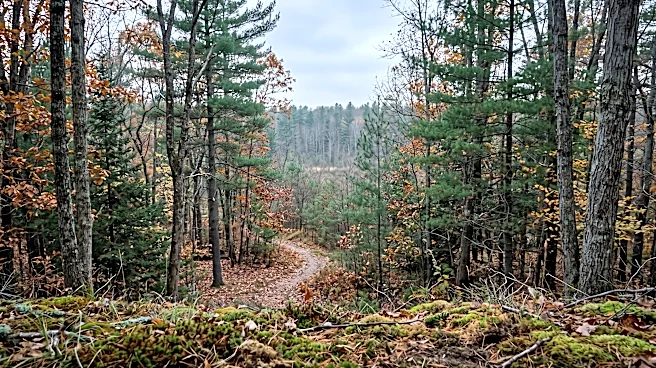
decision to proceed with the Silver Branch Vegetation Management Project in the Ottawa National Forest in Michigan's Upper Peninsula. The Forest Service announced in July that this 30-year project aims to protect clean water, support wildlife habitats, and enhance recreation opportunities. However, the environmental groups contend that the Forest Service failed to adequately assess the environmental impacts of the planned timber harvest, which spans nearly 80,000 acres. They highlight that over 25,000 acres are slated for clearcuts, with an additional 55,000 acres subject to selection harvests, thinning, and other logging methods. The groups argue that these activities could harm endangered species such as the northern long-eared bat and displace endangered wolves and other wildlife due to noise and human presence for up to a decade. They are seeking a U.S. District Court order to vacate the Forest Service’s environmental assessment and project approval.
Why It's Important?
This lawsuit is significant as it underscores ongoing tensions between federal land management objectives and environmental protection concerns. The outcome could set a precedent for how environmental impact assessments are conducted for large-scale forestry projects on federal lands, particularly concerning endangered species and ecosystem integrity. If the court sides with the environmental groups, it could force the Forest Service to undertake more rigorous environmental reviews, potentially delaying or altering future logging operations across national forests. Conversely, a ruling in favor of the Forest Service would affirm its current assessment processes, which could be seen by environmental advocates as a weakening of protections for sensitive ecosystems. The case also highlights the broader debate about balancing economic activities, such as timber harvesting, with conservation efforts and the legal mechanisms available to challenge government decisions impacting natural resources.
What's Next?
The U.S. District Court for the Western District of Michigan will now review the lawsuit filed by the environmental groups. The court will assess whether the U.S. Forest Service adequately complied with environmental laws, specifically regarding its environmental assessment for the Silver Branch Vegetation Management Project. Both parties will likely present arguments and evidence to support their positions. The court could order the Forest Service to conduct a more thorough environmental review, halt the project, or allow it to proceed as planned. Regardless of the initial ruling, appeals are possible, which could prolong the legal battle. This case may also prompt increased scrutiny from other environmental organizations on similar projects nationwide, potentially leading to more legal challenges against federal land management agencies.
Beyond the Headlines
This legal challenge extends beyond the immediate logging project, touching upon the broader interpretation and enforcement of environmental protection laws, particularly the National Environmental Policy Act (NEPA). The environmental groups' assertion that the Forest Service attempted to bypass legal requirements suggests a deeper concern about administrative streamlining potentially compromising environmental safeguards. This case could influence future policy decisions regarding resource management on federal lands, potentially leading to either more stringent environmental review processes or a reaffirmation of existing agency discretion. It also highlights the persistent conflict between resource extraction industries and conservation advocates, reflecting differing views on the sustainable use of public lands and the intrinsic value of biodiversity. The outcome may also impact the operational strategies of timber companies that rely on federal contracts.