







What's Happening?
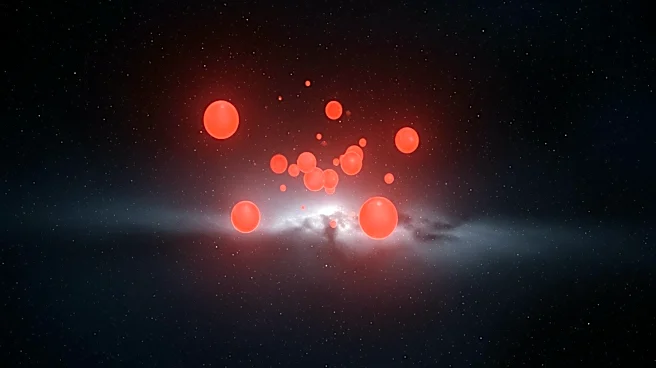
The James Webb Space Telescope (JWST) has identified over 300 mysterious red dots, small astronomical objects with unknown origins. These objects, referred to as little red dots (LRDs), have sparked various theories regarding their nature. One prominent
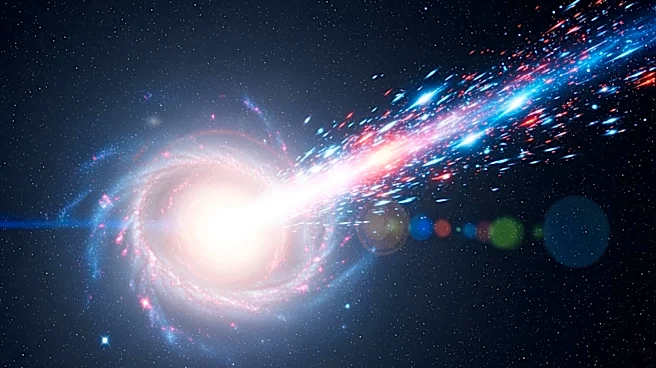
theory suggests that these LRDs could be transitional phases of supermassive black holes consuming dense gas clouds. The Chandra X-ray Observatory has provided additional data, supporting the idea that these LRDs emit X-rays as the black holes ingest surrounding material. This discovery highlights the importance of continued funding for the Chandra X-ray Observatory, which narrowly avoided closure in 2024.
Why It's Important?
The discovery of these LRDs and their potential link to black hole activity could significantly enhance our understanding of black hole formation and behavior. This research may provide insights into the lifecycle of galaxies and the role of black holes in cosmic evolution. The findings underscore the importance of maintaining robust space observation programs, as they contribute to fundamental scientific knowledge and technological advancements. The potential cessation of LRDs once the black holes consume enough material could offer a unique opportunity to observe and understand these cosmic phenomena in real-time.